
Table Of Contents
If you have ever wondered why Palestinians refer to a specific chapter of their history as Black September (Arabic: أيلول الأسود – Aylūl al-Aswad), you are not alone.
The name carries heavy emotional weight; it is not just a calendar month; it is a symbol of betrayal, bloodshed, and one of the most painful defeats in modern Palestinian history.
Here is the full story, told clearly and factually.
The Backdrop: PLO In Jordan After 1967
After Israel’s victory in the 1967 Six-Day War, hundreds of thousands of Palestinians became refugees.
Many fled or were driven into Jordan, which already hosted a large Palestinian population.
The Palestine Liberation Organization (PLO) and its armed factions (known as fedayeen) quickly turned Jordan into their main base for launching attacks against Israel.
At first, King Hussein tolerated the PLO.
However, over time, the situation spiraled:
- Palestinian fighters set up their own checkpoints and parallel authority.
- They clashed repeatedly with the Jordanian army.
- In September 1970, the PLO hijacked several international planes and landed them at Dawson’s Field in Jordan, a direct challenge to the king’s sovereignty.
On 16 September 1970, King Hussein had had enough.
He declared martial law and ordered the Jordanian military to crush the PLO presence.
What Actually Happened: The 10-Day Bloodbath
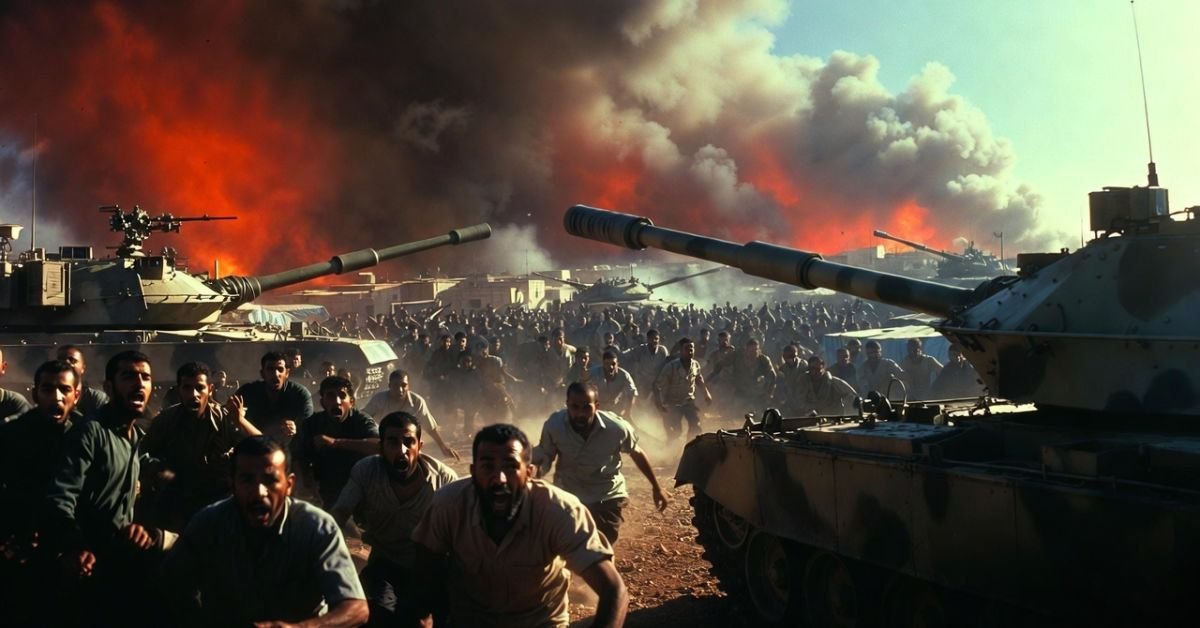
What followed was ten days of brutal fighting (with sporadic clashes continuing into 1971).
Jordanian tanks and artillery shelled Palestinian refugee camps.
Thousands died, estimates range from 3,000 to more than 10,000 Palestinians killed, wounded, or missing.
The PLO leadership, including Yasser Arafat, barely escaped with their lives and were forced to relocate their entire operation to Lebanon.
For Palestinians, this was not just a military defeat.
It was an Arab brother turning his guns on them instead of helping fight the common enemy.
Another Arab state had chosen to protect its own throne over Palestinian aspirations.
Why “Black September”?
Palestinians gave the event its haunting name for the same reason history has “Black Mondays,” “Black Tuesdays,” and other dark milestones: it marked a month of unimaginable tragedy and humiliation.
- Mass casualties in refugee camps.
- The destruction of years of built-up resistance infrastructure.
- The expulsion of the entire PLO from Jordan.
The name Black September became a permanent scar, a reminder that the greatest threats to the Palestinian cause have not always come only from Israel.
From Tragedy To Terror: The Birth Of Black September Organization
The story did not end with the defeat.
A secretive breakaway faction within Fatah (the PLO’s largest group) decided that revenge was the only answer.
They deliberately named their new militant cell the Black September Organization (BSO) to keep the memory of 1970 alive and to vow vengeance against Jordan, and later against Israel and the West.
Their first major strike came in 1971: the assassination of Jordanian Prime Minister Wasfi Tal in Cairo.
Then came even deadlier operations, most notoriously the 1972 Munich Olympics massacre, where BSO gunmen killed 11 Israeli athletes.
The group operated in the shadows for a few years before dissolving back into the broader PLO structure.
Why This History Still Matters
Black September is a reminder of how complicated the Arab-Israeli conflict has always been.
It shows that Palestinians have suffered not only at the hands of Israel but also from fellow Arab regimes.
It also illustrates how one traumatic episode can spawn decades of violence in response.
Today, when Palestinians speak of “Black September,” they are not just recalling a calendar date; they are remembering a moment when the very people who shattered their dream of liberation, they thought would protect them.
About Author