
Table Of Contents
Have you ever thought about bringing a furry or feathery friend into your home but paused because you wanted to make sure it fits with your faith?
You are definitely not alone.
Many Muslim families adore animals and dream of having a pet that brings joy without crossing any lines.
That is exactly why so many people search for the list of pets allowed in Islam (halal).
In Islam, “halal” simply means permissible, referring to things that align with the teachings of the Quran and the Sunnah of Prophet Muhammad (peace be upon him).
Keeping pets is not just okay; it is encouraged when done with kindness, responsibility, and in accordance with Islamic guidelines.
The faith teaches us mercy toward all creatures, and caring for a pet can even earn you rewards if you do it right.
However, there are clear dos and don’ts to keep things pure and peaceful at home.
Why Islam Has Rules About Pets
Islam is all about balance and compassion.
The Prophet (peace be upon him) showed us through his own life how to treat animals with love.
One famous teaching reminds us that “in every living thing there is reward” for kindness.
At the same time, certain animals can affect the cleanliness required for prayer or raise other concerns, which is why we have clear guidance.
The goal? Keep your home a place of peace where angels feel welcome, while giving your pet the best life possible.
The Complete List Of Halal Pets You Can Keep
Most everyday animals that are clean, gentle, and easy to care for are perfectly fine.
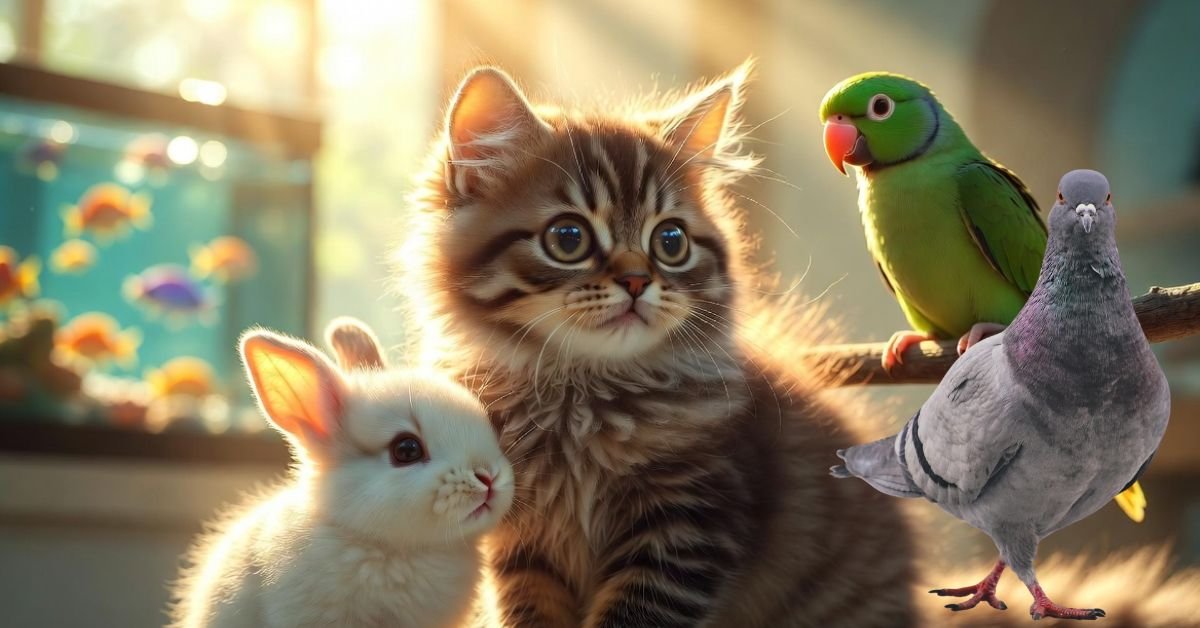
Here is a quick overview in table form for easy reading:
| Pet Type | Allowed? | Key Notes |
|---|---|---|
| Cats | Yes | Super clean and loved in Islam. They can roam freely in the house and even in mosques! |
| Birds (parrots, pigeons, doves) | Yes | Great companions if you give them space to fly or perch comfortably. |
| Fish | Yes | Low-maintenance and super clean – a peaceful addition to any home. |
| Rabbits | Yes | Quiet, gentle, and fun for kids. They’re clean and easy to handle. |
| Hamsters or similar small rodents | Yes | Fine as long as they’re kept clean and not neglected. |
These pets bring happiness without any major issues.
Cats, for example, are praised for their cleanliness; they do not break your wudu (ablution) or stop you from praying.
Birds add beautiful sounds to the house, and a simple fish tank can turn any corner into a calm oasis.
Rabbits make wonderful, quiet buddies for families.
What About Dogs – The Big Question
Dogs are the most commonly discussed pet among those allowed in Islam.
The short answer? They are not ideal as regular indoor pets, but they are allowed for specific purposes, such as guarding your property, herding livestock, or hunting.
Why the rules? Hadiths tell us that keeping a dog just for fun inside the home means losing some daily rewards, and angels of mercy do not enter a house with a dog.
Their saliva is also considered impure, so extra cleaning is needed for prayer areas.
However, if your dog lives outside and serves a real purpose (like protecting your family or farm), that is totally fine, no reward lost.
Many modern Muslim families keep working dogs this way and still show them lots of love.
Pets You Should Avoid (Prohibited Or Strongly Discouraged)
Not every animal makes a good pet in Islam.
Here is what to steer clear of:
- Pigs: They are considered impure (najis) in the Quran.
- Wild or dangerous animals like lions, tigers, snakes, or scorpions – safety first, plus they are meant for the wild.
- Predatory birds (like eagles): Too aggressive for home life.
- Harmful creatures like mice or lizards that we are sometimes encouraged to control for health reasons.
The rule of thumb is simple: if it is harmful, impure, or causes unnecessary suffering, it is not the right choice.
How To Care For Your Halal Pet The Islamic Way
Owning a pet is a big responsibility; it is like having a little family member.
Islam gives us beautiful guidelines:
- Feed them good, halal food and fresh water before you eat yourself.
- Keep their space clean so it does not affect your prayers.
- Never hit, tie up cruelly, or leave them in extreme heat or cold.
- Give them space to move and play – no tiny cages forever for birds or rabbits.
- Show mercy! A well-known story warns of a woman who went to Hell for locking a cat without food or water. On the flip side, even giving water to a thirsty dog earned someone Paradise.
Taking care of a pet teaches kids responsibility, kindness, and patience – all wonderful Islamic values.
Trivia
Here is something cool that always brings a smile: a popular story about the Prophet Muhammad (peace be upon him) and his cat. Legend says he once cut the sleeve of his robe rather than wake his sleeping cat named Muezza. Whether you see it as a sweet tale or a reminder of real-life kindness, it shows just how much Islam values the gentle treatment of animals. It is a story that many Muslim families love to share with their kids!
Wrapping It Up With Love and Faith
So there you have it, your complete, easy-to-follow guide to the list of pets allowed in Islam (halal).
From cuddly cats to bubbly fish tanks, there are plenty of wonderful options that fit perfectly with a Muslim lifestyle.
The key is always compassion, cleanliness, and making sure your pet is happy and healthy.
At THOUSIF INCORPORATED, faith and everyday joys like pet ownership can go hand in hand when we follow simple, clear guidance.
If this helped you, why check out more of our articles on living faithfully in today’s world?
From family tips to daily inspiration, we have plenty more waiting for you.
Got a favorite halal pet or a question about adding one to your home?
I would love to hear in the comments.
Let us keep the conversation going!
May Allah bless your home with peace, love, and maybe a purr or two.
About Author