
Table Of Contents
Several prominent Indian television news channels have come under criticism for their coverage of the recent escalation in the Iran conflict.
Fact-checking organisations and media analysts have identified multiple instances of misleading visuals, recycled footage, and sensational presentation in reports on missile strikes and related developments in the Middle East.
Here are 10 key concerns documented by independent verifiers:
Broadcast Of AI-Generated Footage
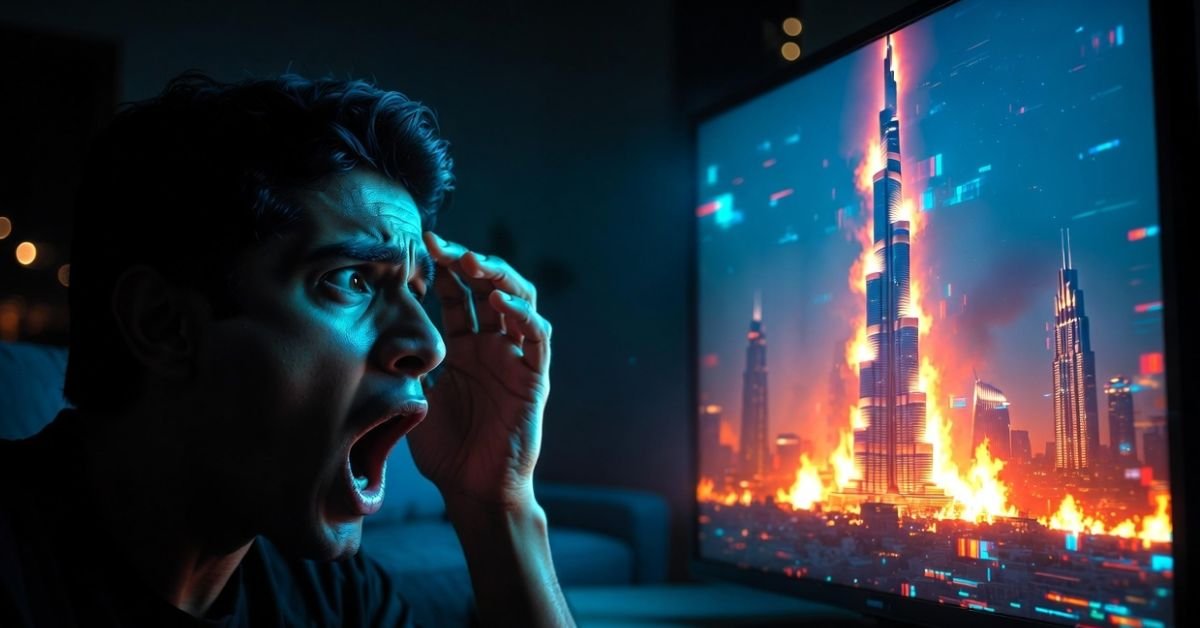
Channels including India News, Times Now, and News18 aired clips showing the Burj Khalifa under attack and engulfed in flames.
Independent verification confirmed the visuals were artificially generated; the landmark sustained no damage.
Misrepresentation Of Old Footage As Current Events
Senior anchors and programmes on multiple networks broadcast video from a prior incident in Bahrain, presenting it as live Iranian missile strikes on Dubai.
Use Of Unrelated Archive Material
NDTV’s reporting on an alleged attack near a US facility in Saudi Arabia included footage unrelated to the incident, as noted by fact-checking organisations.
Incorrect Attribution Of Live Streams
Segments on Times Now and Republic TV featured a woman’s apartment live stream, described as occurring during a missile strike in Dubai.
The clip originated from a different location and an earlier time period.
Undisclosed Use Of AI-Generated Visuals
Several outlets incorporated artificial intelligence-created images of explosions and destruction without labelling or disclosure, leading viewers to mistake them for authentic war footage.
Reliance On Astrological Interpretation
Programmes on Aaj Tak and other channels featured astrologers linking the timing of the conflict to planetary positions and lunar eclipses, rather than geopolitical or strategic experts.
Sensational Presentation Of Casualties
On-screen graphics displayed death tolls in a scoreboard format, comparing losses in a style reminiscent of sports commentary.
Prioritisation Of Ratings Over Accuracy
Critics have highlighted a pattern in which major international crises are viewed primarily through the lens of audience engagement and television ratings.
Amplification Of Superstition
Coverage frequently blended factual reporting with references to eclipses and astrological beliefs, potentially contributing to public anxiety without a scientific basis.
Damage To International Credibility
The United Arab Emirates government issued formal alerts over inaccurate reporting, while global media outlets highlighted the discrepancies, affecting the reputation of Indian television journalism.
Wrapping
Media observers note that such practices undermine public trust at a time when accurate and responsible information is essential.
Viewers are encouraged to cross-check reports with established international news agencies, including Reuters, BBC, and the Associated Press, and to use reverse-image search tools and independent fact-checking platforms for verification.
As the situation in the Middle East continues to develop, the episode has renewed calls for stricter editorial standards in Indian broadcast news.
About Author