
Table Of Contents
Falcon 9 Maintains Dominance In Space Launch Industry
SpaceX’s Falcon 9 rocket continues to set new benchmarks for reusability and launch cadence as activity ramps up in 2026.
As of early April 2026, the Falcon 9 family has conducted more than 630 successful orbital missions, cementing its position as the most frequently launched orbital rocket in history.
The rocket has become synonymous with reliable, cost-effective access to space, primarily through the deployment of Starlink satellites and the support of government and commercial payloads.
What Is The Falcon 9 Rocket?
The Falcon 9 is a two-stage, partially reusable rocket developed by SpaceX.
Powered by Merlin engines that burn liquid oxygen and rocket-grade kerosene, it is capable of delivering payloads to low Earth orbit, geostationary transfer orbit, and beyond.
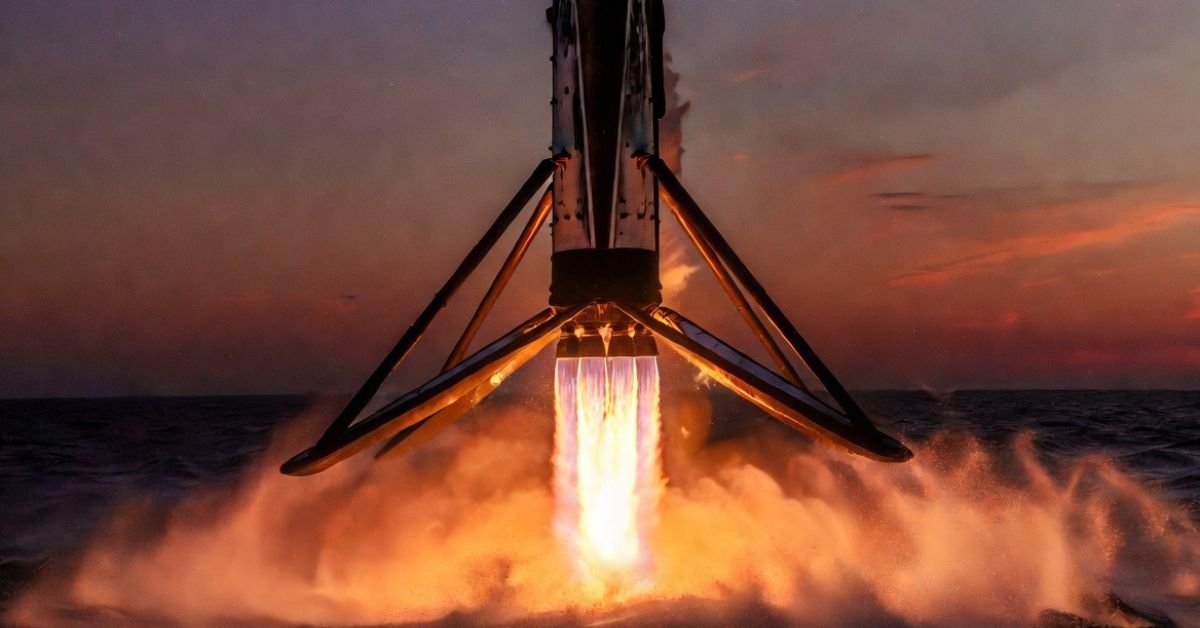
Its defining feature is the first-stage booster, which returns to Earth after separation and lands either on a drone ship or a landing pad for refurbishment and reuse.
This capability has dramatically reduced the cost of spaceflight compared to traditional expendable rockets.
Record-breaking Performance In Recent Months
In 2025, SpaceX achieved a record 165 Falcon 9 launches in a single year.
Early 2026 has already seen continued momentum, including multiple Starlink deployments and the Transporter-16 rideshare mission on March 30, which successfully delivered 119 payloads to orbit.
One of the most notable achievements occurred on that same day: a Falcon 9 booster completed its record 34th flight during a Starlink mission, carrying 29 satellites into low Earth orbit before landing safely.
Key Statistics At A Glance
| Metric | Figure (Early April 2026) |
|---|---|
| Total Falcon 9 Launches | 634 missions (631 full successes) |
| Record Booster Flights | 34 flights (booster B1067) |
| 2025 Annual Launches | 165 |
| Booster Landing Success Rate | 97.9% overall |
| Primary Applications | Starlink, ISS resupply, rideshares |
These figures highlight the exceptional reliability and rapid turnaround that Falcon 9 has achieved through its reusable design.
The Impact Of Reusability
By flying the same booster dozens of times, SpaceX has significantly lowered launch costs, making satellite deployment more affordable for a wide range of customers.
This has accelerated the growth of the Starlink mega-constellation, which provides high-speed internet to underserved regions worldwide, maritime operations, and aviation.
The technology has also supported crewed missions to the International Space Station and various scientific and national security payloads.
Interesting Trivia
A single Falcon 9 first-stage booster has now flown more missions than the entire NASA Space Shuttle fleet did in some of its busiest years, proof that reusability has fundamentally changed the economics and frequency of space access.
Conclusion
The Falcon 9 rocket remains at the forefront of modern spaceflight, balancing high launch frequency with exceptional reliability and reusability.
As SpaceX continues to push the boundaries, this workhorse vehicle plays a central role in expanding humanity’s presence and capabilities in space.
For the latest updates on launch activities and industry advancements, stay tuned to ongoing space news coverage.
About Author