
Table Of Contents
Understanding The Recent Statements From Iran’s President
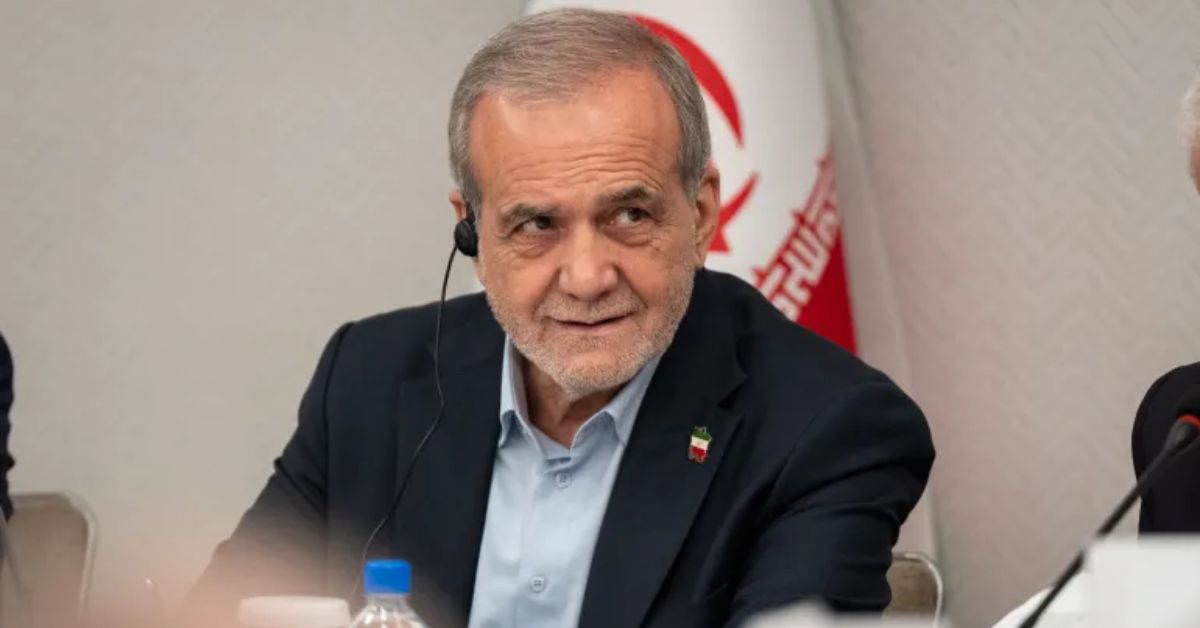
Iranian President Masoud Pezeshkian made headlines late in December 2025 when he stated that his country is engaged in a “full-scale war” with the United States, Israel, and Europe.
In an interview published on the website linked to Iran’s Supreme Leader Ayatollah Ali Khamenei, Pezeshkian emphasized that these nations are applying pressure from every angle, economically, politically, culturally, and in terms of security.
He compared the current situation to the Iran-Iraq War of the 1980s, which lasted eight years and caused immense suffering, but noted that today’s challenges are “far more complex and difficult.”
Pezeshkian warned that any further attacks on Iran would meet a “more decisive response,” adding that Iran’s military is now stronger than it was earlier in the year.
It is important to clarify: This is strong rhetorical language framing ongoing geopolitical tensions, sanctions, and past military actions as a form of warfare.
However, Iran has not issued a formal declaration of war against the US or any other country.
No official legislative or constitutional process has been invoked to declare war in the traditional sense.
The Background: Tensions After The 12-Day War
To understand Pezeshkian’s words, we need to look back at events earlier in 2025.
In June, a brief but intense conflict, often called the “12-Day War”, erupted between Iran and Israel.
It started with Israeli strikes on Iranian military and nuclear sites, leading to significant damage and casualties.
The US became involved by bombing three Iranian nuclear facilities, which Iran viewed as a major escalation.
Iranian reports indicate nearly 1,100 people were killed in these strikes, including senior commanders and scientists.
In response, Iran launched missile barrages, though a ceasefire brokered with US involvement ended the direct fighting on June 24.
Since then, relations have remained strained:
- Western nations reimposed sanctions on Iran’s nuclear program and oil exports.
- Iran has focused on rebuilding its missile capabilities, which has raised concerns in Israel and the US.
- Diplomatic talks on Iran’s nuclear activities stalled.
Pezeshkian’s comments came just before Israeli Prime Minister Benjamin Netanyahu met with US President Donald Trump, where Iran was expected to be a key topic.
Key Events In Iran-US-Israel Tensions (2025 Timeline)
For clarity, here is a simple table summarizing major developments this year:
| Date/Period | Event | Impact |
|---|---|---|
| June 2025 | Israel launches strikes on Iranian sites; the US joins with nuclear facility bombings. | Over 1,000 Iranian casualties; direct Iran-Israel clashes for 12 days |
| June 24, 2025 | US-brokered ceasefire ends active fighting | Temporary halt to airstrikes and missile exchanges |
| September 2025 | Western nations reimpose UN-linked sanctions | Increased economic pressure on Iran |
| December 2025 | Pezeshkian describes the situation as “full-scale war.” | Heightens rhetoric; no new military actions |
| Late December 2025 | Netanyahu-Trump meeting planned | Focus on Iran’s missile program and future options |
This table helps compare the escalation points and shows how rhetoric has intensified without renewed open conflict.
Is The US At War With Iran Right Now?
No, the United States is not in a declared or active state of war with Iran as of late December 2025.
While there have been military actions earlier in the year and ongoing sanctions, no formal war exists.
The US has emphasized preventing Iran from obtaining nuclear weapons and has conducted targeted operations, but leaders on both sides have avoided full-scale escalation since the June ceasefire.
Many analysts see Pezeshkian’s statements as a way to rally domestic support and signal defiance amid economic hardships and international isolation.
An Interesting Fact About President Masoud Pezeshkian
Here is a small quantity of trivia to add context: Masoud Pezeshkian, a heart surgeon by training, became Iran’s president in 2024 after a surprising election win.
He is known for a more moderate approach compared to hardliners, often advocating for better relations with the West, though recent events have pushed him toward tougher language.
Interestingly, he once rode a bicycle publicly to promote healthy living, showing a more relatable side amid high-stakes politics.
What This Means Going Forward
The situation remains tense, with risks of miscalculation on all sides.
Iran’s focus on rebuilding defenses, combined with US and Israeli concerns over missiles and nuclear progress, could lead to further friction.
However, diplomatic channels and mutual interest in avoiding a larger war have so far prevented a repeat of June’s clashes.
About Author