
People online are talking a lot about a possible U.S. nuclear strike on Iran.
Experts have used simple computer models to show how radiation might spread in such a case.
Important note: No nuclear strike has happened. The U.S. government has not said it plans to use nuclear weapons against Iran.
A nuclear bomb gives off two kinds of radiation.
The first kind hits hard right at the moment of explosion, but does not travel far.
For a typical U.S. nuclear weapon (100 to 500 kilotons), this strong radiation would only be deadly within about 1 to 5 kilometers (0.6 to 3 miles) from the blast center.
The bigger worry is the second kind: radioactive fallout.
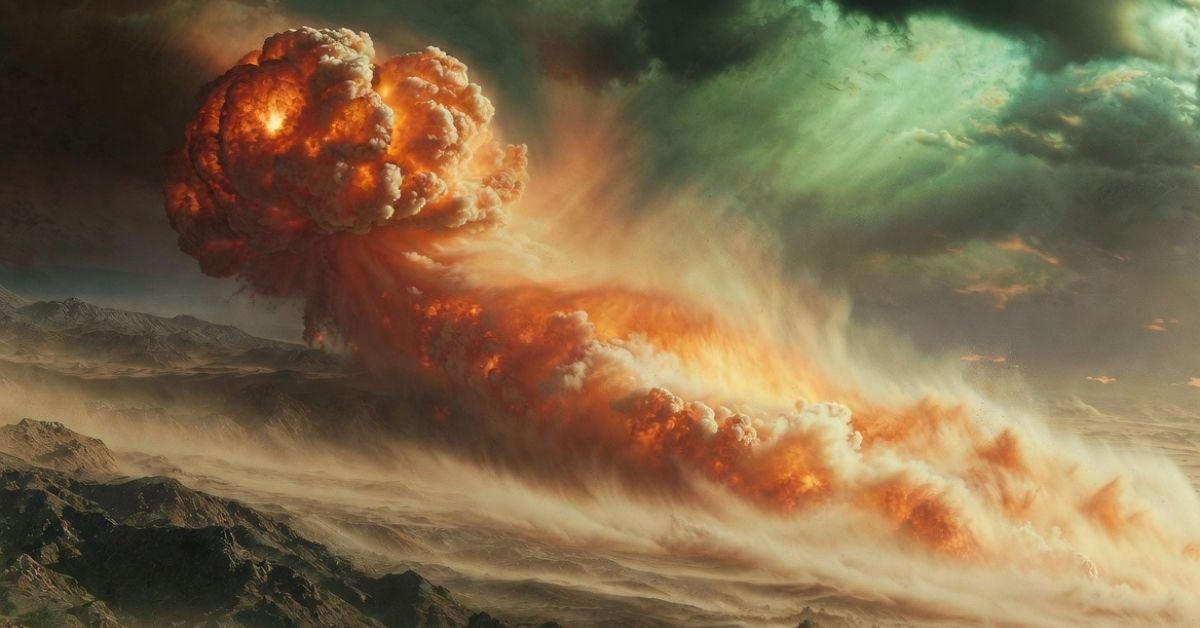
This happens if the bomb explodes on the ground.
The blast sucks up dirt and turns it into radioactive dust.
Wind then carries this dust downwind, sometimes for many miles.
Using standard weather data for Iran in April (winds of 5 to 15 miles per hour), models show what could happen with one 300-kiloton ground blast:
- Deadly radiation levels could reach 12 to 25 miles downwind in the first few hours if people stay outside.
- Areas that need quick shelter could stretch 30 to 60 miles downwind.
- Lower but still unsafe levels could spread 90 to 185 miles downwind over the first day or two.
Iran has mountains and shifting spring winds, so the exact path would depend on the day’s weather.
If the bomb had exploded in the air instead, there would have been much less fallout on the ground.
The good news is that radiation from fallout drops quickly.
It gets about 10 times weaker every 7 hours.
Staying in a basement or a middle room for the first 48 to 72 hours significantly reduces the risk.
“Fallout does not cover everything like a blanket,” said one expert who studies nuclear effects.
“It follows the wind and gets weaker fast. Quick action saves lives.”
Some spots could stay risky for months or years, raising cancer chances for people who live there.
However, tiny bits of radiation spread around the whole world would be very small compared to the old nuclear tests.
This report uses only publicly available, peer-reviewed science from government studies and easy-to-use modeling tools.
It is not based on secret plans or real events.
Experts say using nuclear weapons is still a very rare and extreme choice, even when tensions are high.
About Author