
Table Of Contents
Strait Of Hormuz
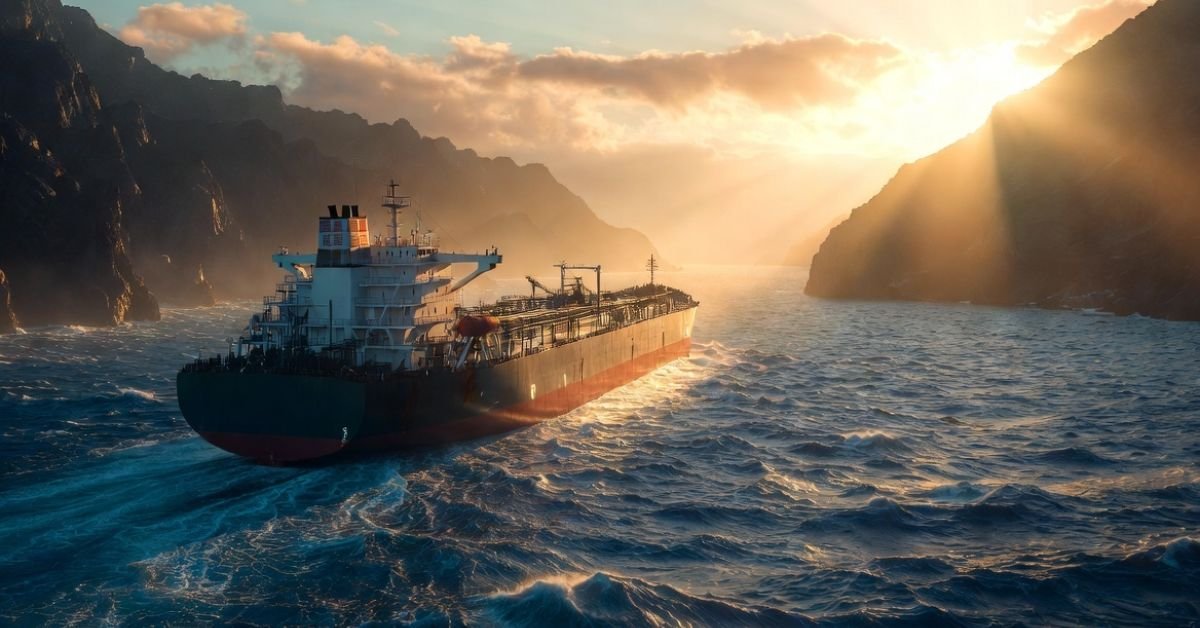
Most of the oil that passes through the Strait of Hormuz is bound for Asia. When the channel closes, the bill arrives everywhere.
Status as of June 21, 2026: The Strait is in the early stages of reopening.
Iran closed it to commercial traffic on February 28, 2026, during its war with the United States and Israel.
A ceasefire deal was signed on June 17, and the lifting of the United States naval blockade on June 18 began the reopening.
Traffic remains far below normal, the mined central channel is still closed, and analysts expect full recovery to take months.
The Strait of Hormuz is a narrow strait between Iran and Oman.
It is also the single most important oil passage on the planet.
Here is the core fact that explains everything else.
About a fifth of the world’s oil moves through it; there is no sea route around it, and most of that oil is headed to Asia rather than the West.
That last point is where most coverage goes wrong.
The countries that depend most directly on the Strait are in Asia, not in Europe or the United States.
However, because oil is priced on a single global market, a closure raises fuel costs for everyone, including buyers who source none of their supply from the Gulf.
The first half of 2026 proved the point.
For nearly four months, the Strait was closed, and the shock was felt worldwide.
This is a plain explainer of what the Strait is, why it matters so much, and why a narrow channel keeps deciding the price of energy.
Where The Strait Actually Is
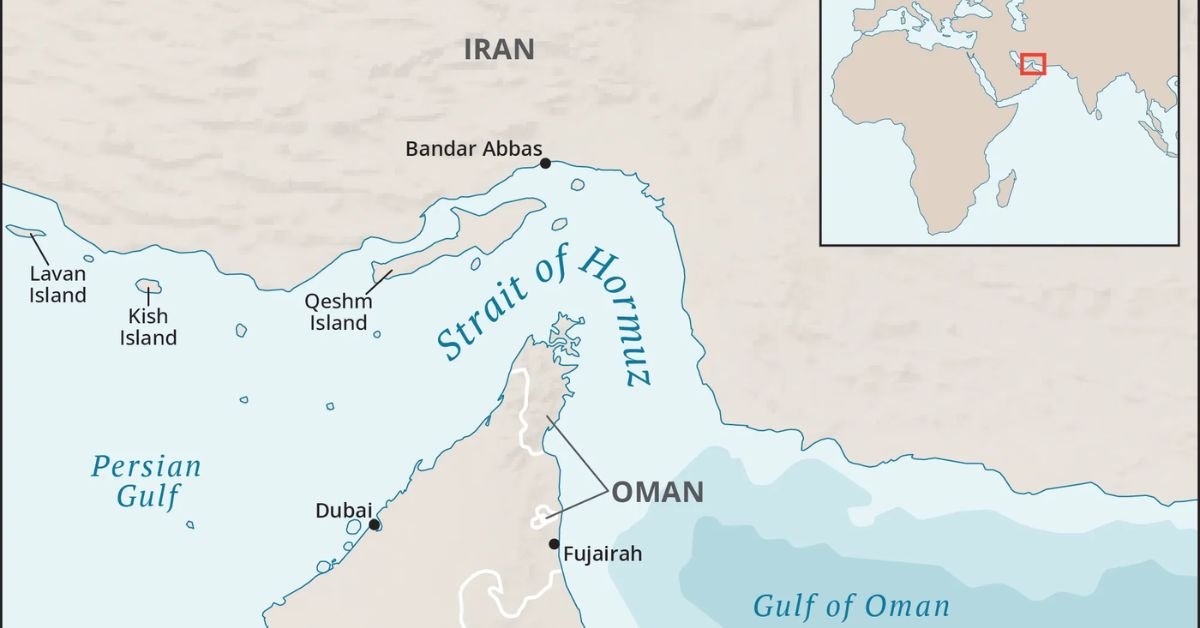
The Strait of Hormuz connects the Persian Gulf to the Gulf of Oman, and from there to the Arabian Sea and the open ocean.
Iran sits along the northern shore.
Oman holds the southern shore through its Musandam Peninsula, with the United Arab Emirates close by.
The waterway is roughly 104 miles long.
At its narrowest point, it is only about 21 miles wide.
The usable shipping lanes are far tighter than that.
Tankers follow a traffic separation scheme, with one lane for inbound ships and one for outbound ships.
Each lane is about two miles wide, separated by a two-mile buffer.
So a fifth of the world’s oil squeezes through corridors only a couple of miles across.
That is the heart of the problem.
How Much Oil Depends On It
In a normal year, around 20 million barrels of oil and petroleum products pass through the Strait each day.
That is close to one-fifth of global consumption and more than a quarter of all oil traded by sea.
It is not only oil.
Roughly a fifth of the world’s liquefied natural gas also passes through, most of it from Qatar.
Saudi Arabia moves the most crude through the Strait, followed by Iraq and the United Arab Emirates.
Iran, Kuwait, Qatar, and Bahrain depend on it too.
For several of these countries, it is the only sea route for their exports.
Most of that oil heads east.
The large majority goes to Asia, with China and India the biggest buyers, followed by Japan and South Korea.
The United States now imports very little oil through the Strait of Hormuz because American shale has changed the picture.
In direct terms, the country most associated with policing the Strait is among the least dependent on it.
Why Is There No Easy Detour
A few chokepoints in the world can be avoided by sailing a longer route. Hormuz is not one of them.
Geography gives the Persian Gulf only this one sea exit.
The alternatives are pipelines, and they are limited.
Saudi Arabia runs an east-west pipeline to the Red Sea.
The United Arab Emirates has a coastline on the Gulf of Oman.
Together, they can divert only a few million barrels a day, far below the 20 million that normally flow through the Strait.
Iran built its own bypass pipeline to the Gulf of Oman, but it has sat largely unused.
The math is simple.
The pipelines cannot replace the Strait.
If Hormuz closes for any length of time, most of that oil has nowhere to go.
The 2026 Closure, And The Pattern Behind It
The Strait has been a pressure point for decades.
During the Iran-Iraq war in the 1980s, both sides attacked tankers in what became known as the Tanker War.
More than 500 vessels were hit.
In the years since, Iran has threatened to close the Strait many times, usually during sanctions disputes or failed nuclear talks.
For decades, these stayed as threats.
Traffic kept moving, and many analysts assumed Iran would never follow through because its own exports also depend on the channel.
2026 broke that assumption.
After the United States and Israel struck Iran in late February, Iran closed the Strait to commercial traffic, attacked ships, and laid sea mines.
Daily traffic fell from about 100 vessels to a handful, and more than a thousand ships were left waiting outside.
The closure lasted for nearly four months.
The International Energy Agency described it as the largest oil supply disruption in the market’s history, larger than the shocks of the 1970s.
A ceasefire deal in mid-June began a slow and fragile reopening.
The lesson is uncomfortable but important.
The old reassurance was that Hormuz was too valuable for Iran to close.
2026 showed that when a conflict becomes serious enough, logic can fail.
What A Closure Actually Does
A serious disruption at Hormuz does three things quickly.
It raises oil prices worldwide because oil trades on a single global market, and traders price in the loss of supply.
It raises shipping and insurance costs, because the route becomes dangerous and underwriters pull war risk cover.
Moreover, it forces a scramble for alternatives, from emptying strategic reserves to sending tankers the long way around Africa.
The damage is not limited to the Gulf’s customers.
In 2026, European energy buyers, Asian importers, and global container shipping were all hit, even though much of the world does not rely directly on oil from the Strait.
That is the point.
The Strait does not have to supply you to raise your bills.
Worth Knowing
The southern shore of the Strait belongs to Oman, but it sits on the Musandam Peninsula, an exclave cut off from the rest of Oman by the United Arab Emirates.
One of the world’s most strategic coastlines is, on a map, a piece of Oman that does not touch the rest of the country.
Frequently Asked Questions
Is The Strait Of Hormuz Open Right Now?
As of June 21, 2026, it is partly reopened. Iran closed it to commercial shipping on February 28, 2026, during its war with the United States and Israel. A ceasefire deal on June 17 and the end of the United States blockade on June 18 started the reopening, but traffic is still light, the mined central channel remains closed, and full recovery is expected to take months.
Why Is The Strait Of Hormuz So Important?
In a normal year, it carries about a fifth of the world’s oil and a fifth of its traded liquefied natural gas. It is the only sea exit from the Persian Gulf, so there is no full substitute if it closes.
Can Oil Bypass The Strait Of Hormuz?
Only in small amounts. Saudi Arabia and the United Arab Emirates have pipelines that route some crude to the Red Sea and the Gulf of Oman. However, together they can carry only a few million barrels a day, far short of the roughly 20 million that normally pass through the Strait.
The Bottom Line
The Strait of Hormuz is a small place with outsized power.
A channel a few miles wide carries a fifth of the world’s oil, has no real substitute, and sits beside one of the most volatile borders on earth.
Most of that oil flows east to Asia.
The price, when the channel closes, is paid by everyone.
Figures in this article are drawn from the U.S. Energy Information Administration and the International Energy Agency. Status details reflect reporting as of June 21, 2026.
About Author