
Table Of Contents
Assassination In Zintan
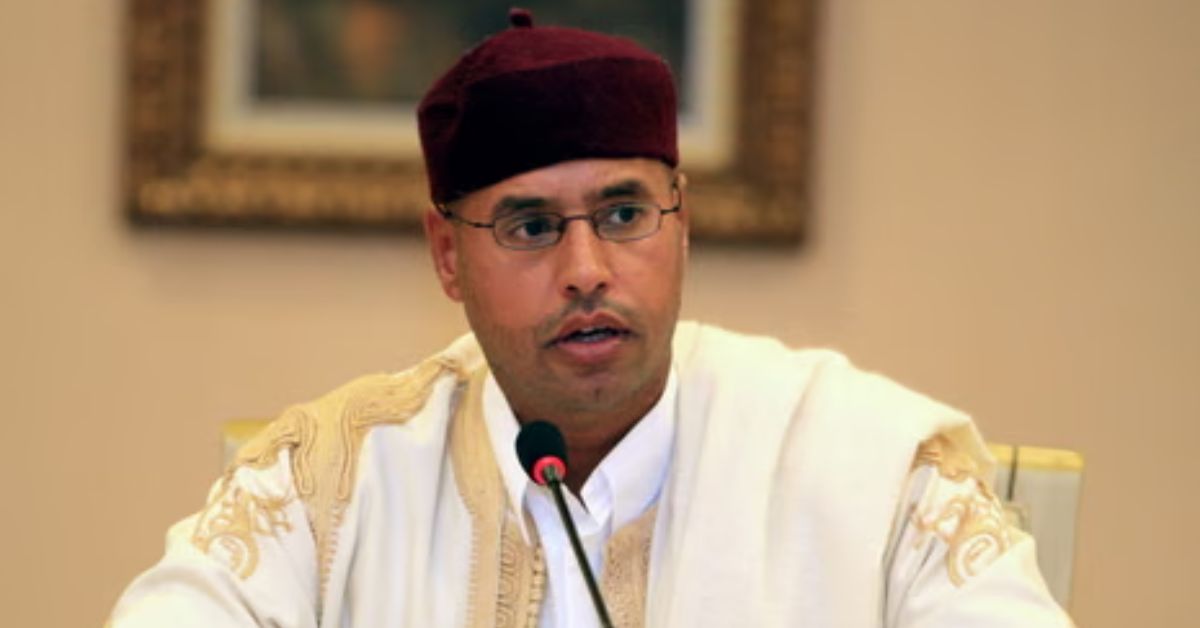
Saif al-Islam Gaddafi, the most politically active son of the late Libyan leader Muammar Gaddafi, was assassinated on February 3, 2026, at his residence in the western town of Zintan.
According to statements from his political adviser, Aman Abdullah, four armed men entered the property and shot him dead.
The Libyan general prosecutor’s office promptly launched an investigation.
A forensic team examined the body late that night and confirmed death by multiple gunshot wounds.
While authorities have pledged a thorough probe, experience in Libya suggests that identifying and prosecuting the perpetrators will be difficult amid competing militias and political rivalries.
Zintan has been Saif al-Islam’s base since his capture in 2011.
After years in captivity there, he was released in 2017 and continued to live under the protection of local armed groups.
Background On Saif al-Islam Gaddafi
Once viewed internationally as a potential reformer and successor to his father, Saif al-Islam held a PhD from the London School of Economics and cultivated ties with Western governments and institutions.
When the 2011 uprising began, however, he aligned fully with the regime, appearing on television to defend it and playing a key role in the violent response to protesters.
Captured by Zintan militias in November 2011, he faced an International Criminal Court arrest warrant for alleged crimes against humanity.
A Tripoli court sentenced him to death in absentia in 2015.
He was released two years later under a general amnesty.
In 2021, he registered as a presidential candidate, capitalising on widespread frustration with post-2011 instability. His candidacy contributed to the indefinite postponement of national elections.
Fact
Saif al-Islam lost the thumb and index finger of his right hand during a NATO airstrike in 2011, an injury he frequently displayed as a symbol of foreign intervention in Libya.
Reactions Across A Divided Country
The news elicited starkly contrasting responses.
In Misrata, a city that was a significant rebel stronghold during the 2011 revolution, residents celebrated with fireworks and public gatherings.
In Sirte, the Gaddafi family’s traditional hometown, mourners, particularly women, took to the streets in grief.
Online, supporters and associates quickly accused figures linked to eastern commander Khalifa Haftar, citing his reported unease over Saif al-Islam’s rising popularity.
Others pointed to rival Western militias.
The rapid blame game reflects Libya’s enduring factional divides.
Timeline Of Key Events
| Year | Event |
|---|---|
| June 25, 1972 | Born in Tripoli as Muammar Gaddafi’s second son |
| 2000s | Emerges as public face of regime; studies at LSE |
| February 2011 | Publicly defends regime during Arab Spring uprising |
| November 2011 | Captured by Zintan militias |
| 2015 | Sentenced to death in absentia by Tripoli court |
| 2017 | Released under amnesty law |
| November 2021 | Announces presidential candidacy; elections postponed |
| February 3, 2026 | Assassinated at residence in Zintan |
Implications For Libya’s Fragile Stability
Analysts, including Claudia Gazzini of the International Crisis Group, note that Saif al-Islam lacked his own dedicated military force, reducing the likelihood of immediate armed retaliation.
However, his death removes a symbolic figure who embodied nostalgia for the pre-2011 era among a significant portion of the population.
The assassination may intensify mutual suspicion between the UN-recognised government in Tripoli and the eastern administration led by Khalifa Haftar.
In a context of stalled elections, deteriorating economic conditions, and widespread disillusionment, the killing risks further eroding the tenuous calm that has prevailed in recent years.
Closing Note
The assassination of Saif al-Islam Gaddafi marks the end of a prominent and controversial chapter in Libya’s post-revolution history.
It also underscores the persistent challenges facing a nation still searching for a lasting political settlement.
We will continue to monitor developments and provide updates as they emerge.
About Author