
Table Of Contents
SpaceX marked a triumphant return to flight for its Falcon Heavy rocket today, executing a flawless liftoff from Launch Complex 39A at NASA’s Kennedy Space Center at 10:13 a.m. EDT.
The mission, carrying the ViaSat-3 F3 satellite, represented the 12th flight of the powerful triple-core vehicle and its first launch in nearly 18 months.
The rocket thundered skyward under clear Florida skies, propelling the final satellite in Viasat’s next-generation ViaSat-3 series toward a geosynchronous transfer orbit (GTO).
The launch followed a weather-related scrub on April 27, making today’s success even more satisfying for teams at SpaceX and Viasat.
Spectacular Liftoff And Precision Booster Recoveries
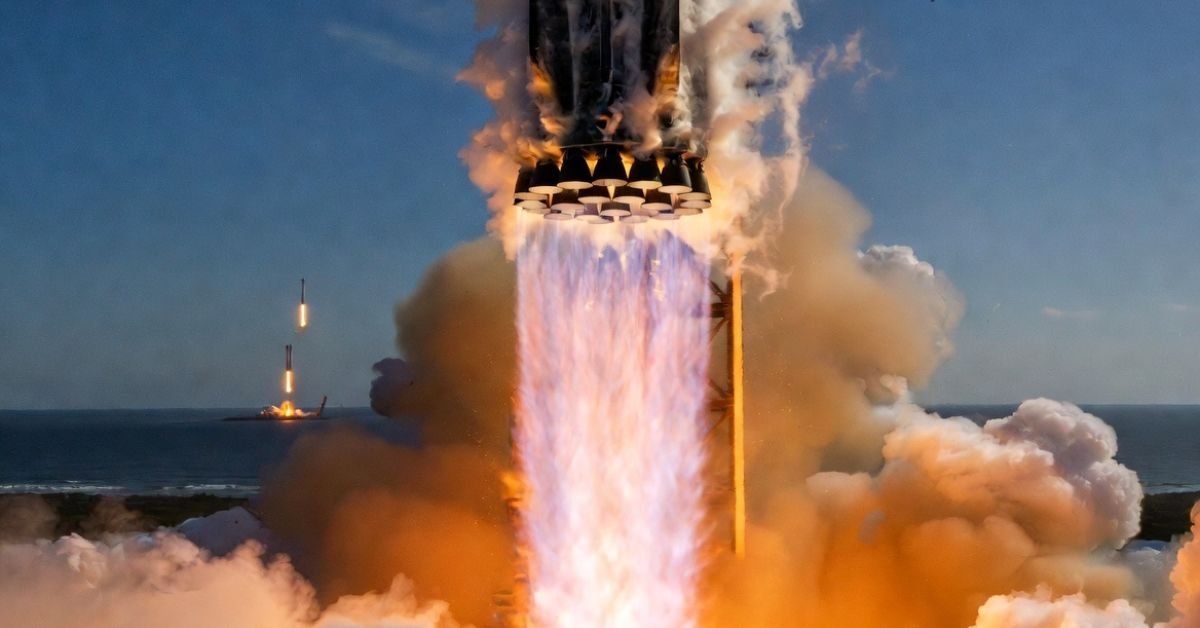
Falcon Heavy’s 27 Merlin engines ignited with more than 5.1 million pounds of thrust, lighting up the Florida coast.
Just over two minutes after liftoff, the two side boosters separated cleanly from the center core.
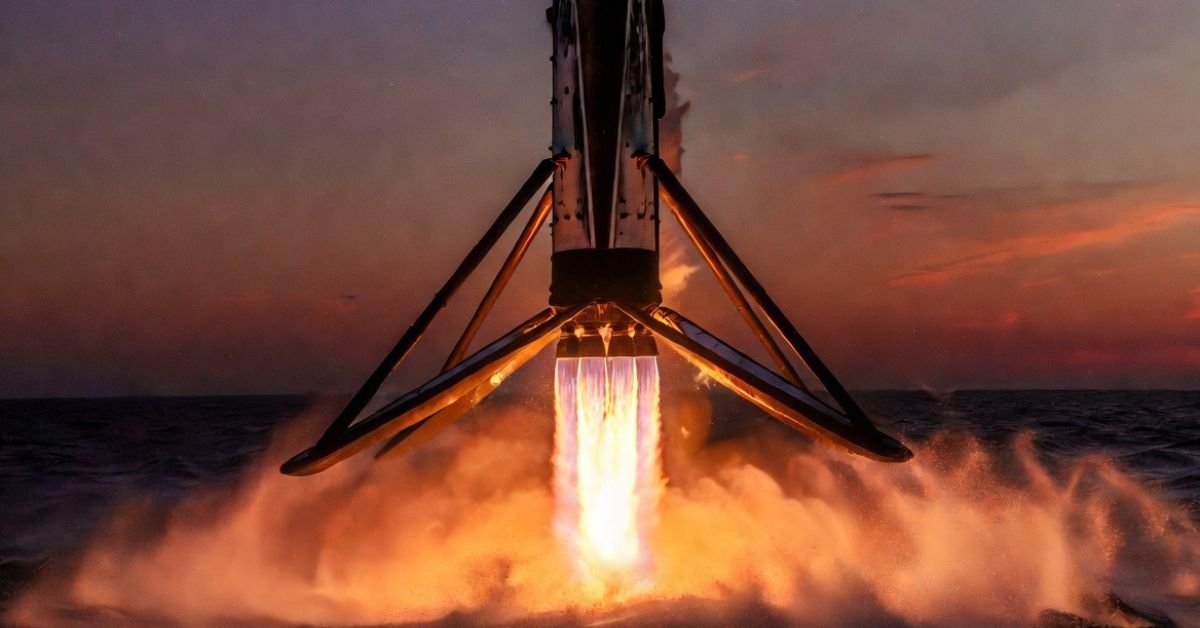
Eight minutes into the flight, both reusable boosters touched down in synchronized vertical landings at SpaceX’s Landing Zones 2 and 40 on Cape Canaveral Space Force Station.
One side booster completed its remarkable 22nd flight, highlighting the proven reliability of SpaceX’s reusable technology.
The second booster was on its second mission.
As planned for this high-energy trajectory, the center core was expended into the Atlantic Ocean after fulfilling its role.
SpaceX captured dramatic footage of the landings, which drew cheers from mission control as the boosters touched down with pinpoint accuracy.
Mission Payload And Global Impact
The payload, ViaSat-3 F3, is a Boeing-built satellite weighing about six metric tons.
It carries an ultra-high-capacity Ka-band communications system designed by Viasat in Tempe, Arizona, mounted on Boeing’s 702MP+ satellite bus.
Once it reaches its operational geostationary slot over the Asia-Pacific region using its electric propulsion system, it will deliver more than one terabit per second of high-speed broadband capacity.
With this launch, Viasat’s ambitious ViaSat-3 constellation is now complete, spanning the Americas (F1, launched 2023), Europe, the Middle East, and Africa (F2), and now the Asia-Pacific region.
The full network promises to transform connectivity for consumers, airlines, maritime operations, businesses, and governments in high-demand and underserved areas worldwide.
Choosing Falcon Heavy enabled Viasat to achieve a more favorable initial orbit, significantly shortening the satellite’s journey to its final position compared to lighter-lift rockets.
A Milestone In Reusable Heavy-Lift Spaceflight
Since its debut in 2018, Falcon Heavy has stood as one of the world’s most powerful operational rockets and the only heavy-lift vehicle with proven booster reusability.
Today’s mission further solidifies SpaceX’s leadership in commercial space transportation, bringing the company’s total orbital launches past 660.
Satellite deployment is expected roughly five hours after liftoff, with teams closely monitoring the upper stage during the extended coast phase.
Both Viasat and SpaceX expressed strong satisfaction with the mission’s outcome, noting its critical role in meeting surging global demand for high-speed satellite internet.
As the industry eyes even bolder endeavors like Starship’s future crewed and cargo flights, this Falcon Heavy success serves as a compelling reminder of how far reusable rocketry has come and the growing importance of commercial providers in building vital space infrastructure.
SpaceX’s next Falcon Heavy mission is slated for later in 2026.
For now, today’s flawless performance adds another proud chapter to the story of modern spaceflight.
A spectacular day for SpaceX, Viasat, and the future of worldwide connectivity.
About Author