
Table Of Contents
In the vast tradition of Ayurveda, certain herbal formulations have stood the test of time as powerful allies for restoring health from within.
One such classical remedy is Mahatiktakam Kashayam (also spelled Mahathikthakam or Mahatiktakam Kashayam), a bitter herbal decoction prominently featured in the ancient Ayurvedic text Ashtangahrudayam.
This potent water-based extract is primarily known for its ability to pacify aggravated Pitta dosha, the Ayurvedic principle governing heat, metabolism, and transformation in the body.
It is traditionally valued as a natural blood purifier (Rakta Shodhana), detoxifier, and supportive therapy for chronic skin conditions, inflammatory imbalances, and certain digestive concerns.
Its bitter taste and cooling properties make it a go-to formulation in Ayurvedic practice for addressing issues rooted in excess heat and accumulated toxins (ama).
The Power Of Its Ingredients
What makes Mahatiktakam Kashayam unique is its carefully balanced composition of nearly 30 medicinal herbs, each chosen for its specific therapeutic qualities.
The formula draws from a wide range of bitter, detoxifying, and anti-inflammatory plants that work synergistically to support skin clarity, liver function, and overall metabolic health.
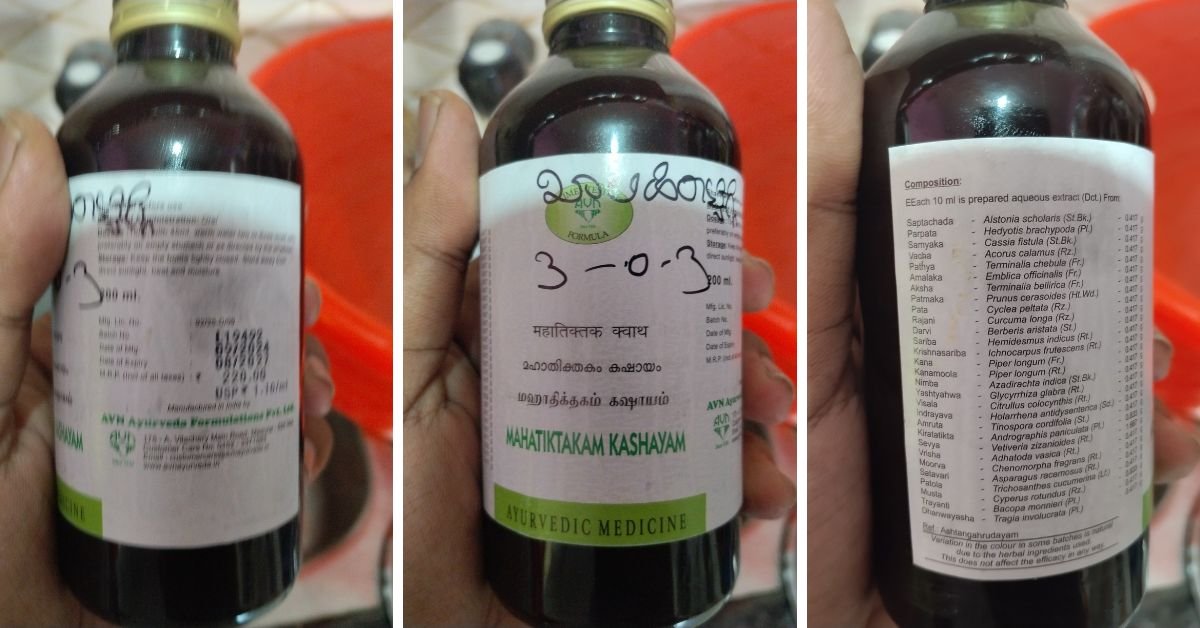
Here is the complete list of ingredients traditionally used in Mahatiktakam Kashayam:
| Sanskrit Name | Botanical Name | Part Used |
|---|---|---|
| Saptachada | Alstonia scholaris | Stem Bark |
| Parpata | Hedyotis brachypoda | Plant |
| Samyaka | Cassia fistula | Stem Bark |
| Vacha | Acorus calamus | Rhizome |
| Pathya | Terminalia chebula | Fruit |
| Amalaka | Emblica officinalis | Fruit |
| Aksha | Terminalia bellirica | Fruit |
| Patmaka | Prunus cerasoides | Heart Wood |
| Pata | Cyclea peltata | Rhizome |
| Rajani | Curcuma longa | Rhizome |
| Darvi | Berberis aristata | Stem |
| Sariba | Hemidesmus indicus | Root |
| Krishnasariba | Ichnocarpus frutescens | Root |
| Kana | Piper longum | Fruit |
| Kanamoola | Piper longum | Root |
| Nimba | Azadirachta indica | Stem Bark |
| Yashtyaha | Glycyrrhiza glabra | Root |
| Visala | Citrullus colocynthis | Seed |
| Indrayava | Holarrhena antidysenterica | Stem |
| Amruta | Tinospora cordifolia | Stem |
| Kiratatika | Andrographis paniculata | Plant |
| Sevya | Vetiveria zizanioides | Root |
| Vrisha | Adhatoda vasica | Root |
| Moorva | Chenomorpha fragrans | Root |
| Satavari | Asparagus racemosus | Root |
| Patola | Trichosanthes cucumerina | Leaf |
| Musta | Cyperus rotundus | Rhizome |
| Trayanti | Bacopa monnieri | Plant |
| Dhanwayasha | Tragia involucrata | Plant |
Each herb contributes to the formula’s overall action: Nimba (Neem) and Amruta (Guduchi) are renowned for their blood-purifying and antimicrobial effects, while Triphala (Pathya, Amalaka, Aksha) supports digestion and detoxification.
Cooling roots like Sariba and Sevya help soothe inflammation, and bitter herbs such as Kiratatika and Visala enhance the formula’s Pitta-pacifying effects.
Traditional Benefits And Uses
Mahatiktakam Kashayam is most celebrated for its role in managing Pitta-dominant skin disorders (Kushta), including conditions characterized by redness, itching, burning, inflammation, and chronic eruptions.
Ayurvedic practitioners often recommend it for:
- Chronic skin conditions such as psoriasis, eczema, dermatitis, acne, boils, and non-healing wounds
- Blood impurities and toxic buildup that manifest on the skin
- Inflammatory and burning sensations throughout the body
- Supportive care for certain liver and metabolic imbalances
- Mild digestive disturbances linked to excess heat, such as hyperacidity or gastritis
Beyond skin health, the decoction is valued for promoting internal cleansing, supporting healthy digestion, and restoring balance when Pitta dosha is aggravated due to diet, lifestyle, or seasonal factors.
Who Can Use It And General Guidance
Mahatiktakam Kashayam is traditionally considered suitable for adults when prescribed by a qualified Ayurvedic practitioner.
Dosage is personalized based on age, body constitution (Prakriti), current state of health (Vikriti), and specific needs.
In general practice:
- Adults typically take it diluted in warm water, on an empty stomach or before meals.
- For children and the elderly, the dose is significantly lower and should be administered only under professional supervision.
- It is usually recommended for a course of several weeks to a few months, depending on the individual’s response.
For optimal results, it is traditionally paired with a Pitta-pacifying diet that favors bitter, astringent, and cooling foods while minimizing spicy, sour, oily, and fermented foods.
Important Considerations
As with all Ayurvedic formulations, Mahatiktakam Kashayam works best as part of a holistic approach that includes proper diet, lifestyle, and professional guidance.
It is a strong bitter tonic and may not be suitable for everyone, particularly those with very weak digestion or certain constitutional types.
Pregnant or breastfeeding individuals, people with diabetes, or those on medications should consult a qualified Ayurvedic physician before use.
Disclaimer
This article is for educational and informational purposes only, based on classical Ayurvedic principles. It is not intended as medical advice or a substitute for professional healthcare. Always consult a licensed Ayurvedic practitioner or healthcare provider before starting any herbal regimen.
Mahatiktakam Kashayam remains a shining example of Ayurveda’s wisdom, using nature’s bitter gifts to bring balance, clarity, and lasting wellness from the inside out.
Whether you are exploring traditional remedies for skin health or seeking gentle detoxification support, this classical decoction continues to offer timeless value in modern wellness journeys.
About Author