
Table Of Contents
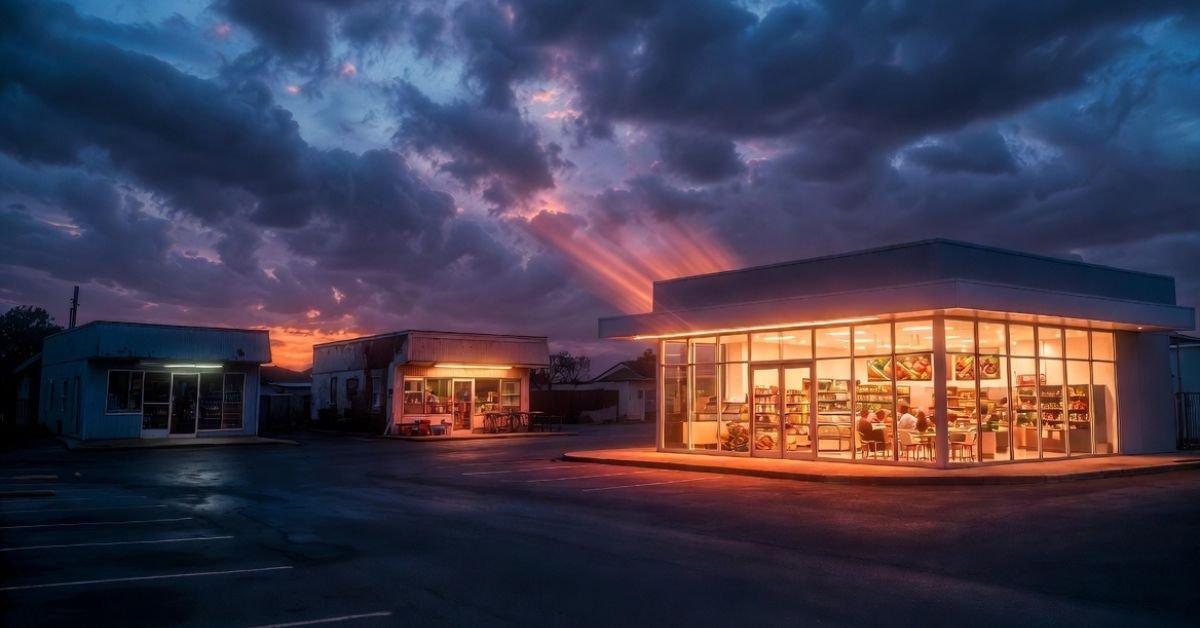
Convenience store operator 7-Eleven will close 645 locations across the United States and Canada during its fiscal year 2026 (March 2026–February 2027), according to earnings filings from parent company Seven & i Holdings.
The company plans to open just 205 new stores in the same period, resulting in a net loss of more than 400 outlets and marking the fifth consecutive year of store-count contraction.
Some of the shuttered sites will be converted into wholesale fuel-only operations that no longer count toward the convenience-store total. This move has become increasingly common for the chain.
Specific locations have not been disclosed, and closures are expected to roll out gradually rather than all at once.
The aggressive pruning is part of a broader restructuring aimed at shifting 7-Eleven away from its traditional small-format, snack-and-cigarette model toward larger “New Standard” stores that emphasize fresh and prepared food, expanded kitchens, in-store seating, and higher-margin private-label items.
Early results from the new format are promising on paper: mature locations are projected to deliver average daily sales roughly 30 percent higher than the current chain average once fully ramped up.
However, the scale of the closures has raised eyebrows among industry watchers.
While foodservice has grown to nearly 30 percent of in-store sales industry-wide and offers far better margins than declining cigarette sales do, 7-Eleven has lagged behind more agile competitors such as QuikTrip, Wawa, and Sheetz, which built their reputations on made-to-order meals years ago.
The chain’s North American business, which still operates roughly 12,000 stores, has faced persistent headwinds, including softer consumer spending among lower-income shoppers and the lingering effects of its 2021 acquisition of Speedway.
Human And Community Impact
The closures could leave gaps in late-night retail access, particularly in lower-income neighborhoods, small towns, and rural areas where 7-Eleven has long served as a default option for essentials, coffee, and quick meals.
While the company has said affected employees may be offered relocation to nearby stores, the move is expected to result in job losses for hundreds, if not thousands, of workers.
No official estimate of layoffs has been released.
IPO Delay Signals Deeper Challenges
In a related development, Seven & i Holdings has pushed back the planned initial public offering of its North American convenience-store and fuel business until fiscal 2027 at the earliest.
The delay, originally targeted for the second half of 2026, was attributed to both market volatility and the need to show clearer progress on the turnaround before going public.
The postponement comes after longtime North American CEO Joseph DePinto retired at the end of 2025, leaving the operation under interim leadership.
Some analysts view the IPO delay as an admission that the transformation is taking longer than hoped, and that shrinking the store base alone may not be enough to restore momentum.
Whether the food-forward bet pays off remains an open question.
While the company is racing to catch up to rivals that have long dominated the grab-and-go food segment, critics note that closing hundreds of doors risks accelerating short-term sales erosion.
For now, 7-Eleven is betting that fewer, stronger stores will ultimately deliver a healthier, more competitive business.
The full list of affected locations is still pending.
Customers and employees in impacted markets are advised to monitor local announcements in the coming months.
About Author