
Table Of Contents
The relationship between Iran and India is one of the world’s oldest and most significant civilizational connections.
Spanning more than three millennia, the ties between these two ancient cultures have profoundly influenced language, religion, architecture, governance, and trade.
Ancient Indo-Iranian Origins
The foundations of Iran-India relations trace back to the Indo-Iranian migrations around 2000–1500 BCE.
These nomadic groups, originating from the Central Asian steppes, split into two branches.
One settled in the Iranian plateau while the other moved into the Indian subcontinent.
This shared ancestry is evident in their ancient languages, Avestan and Sanskrit, as well as in their sacred texts.
The Avesta and the Vedas contain striking similarities in vocabulary, deities, and philosophical concepts, highlighting a common cultural and linguistic heritage.
Achaemenid Empire And Early Political Links
The first major political connection emerged during the Achaemenid Persian Empire.
Under Cyrus the Great and Darius I, Persia incorporated large parts of northwestern India, including Gandhara and Hindush.
These provinces became vital contributors to the empire, supplying gold, ivory, and other valuable resources.
Persian administrative systems, including the satrapy model and extensive road networks, left a lasting impact on governance practices in the Indian subcontinent.
The Arrival Of The Parsi Community
Following the fall of the Sassanid Empire and the Arab conquest of Persia in the 7th century CE, many Zoroastrians migrated to India in search of religious freedom.
They settled primarily in Gujarat between the 8th and 10th centuries.
Welcomed by local rulers, these migrants became known as Parsis.
They successfully preserved their ancient Zoroastrian traditions while integrating into Indian society.
Over the centuries, the Parsi community has made remarkable contributions to India’s industrial, political, and cultural development.
Persian Influence In The Mughal Era
The cultural exchange reached its zenith during the Mughal Empire.
Persian became the official language of the court and administration from the 16th century onward.
Emperors such as Akbar, Jahangir, and Shah Jahan maintained strong diplomatic and cultural relations with Safavid Iran.
This period witnessed a remarkable fusion of Persian and Indian artistic traditions.
Mughal architecture, miniature painting, garden design, and literature reflected strong Persian influences.
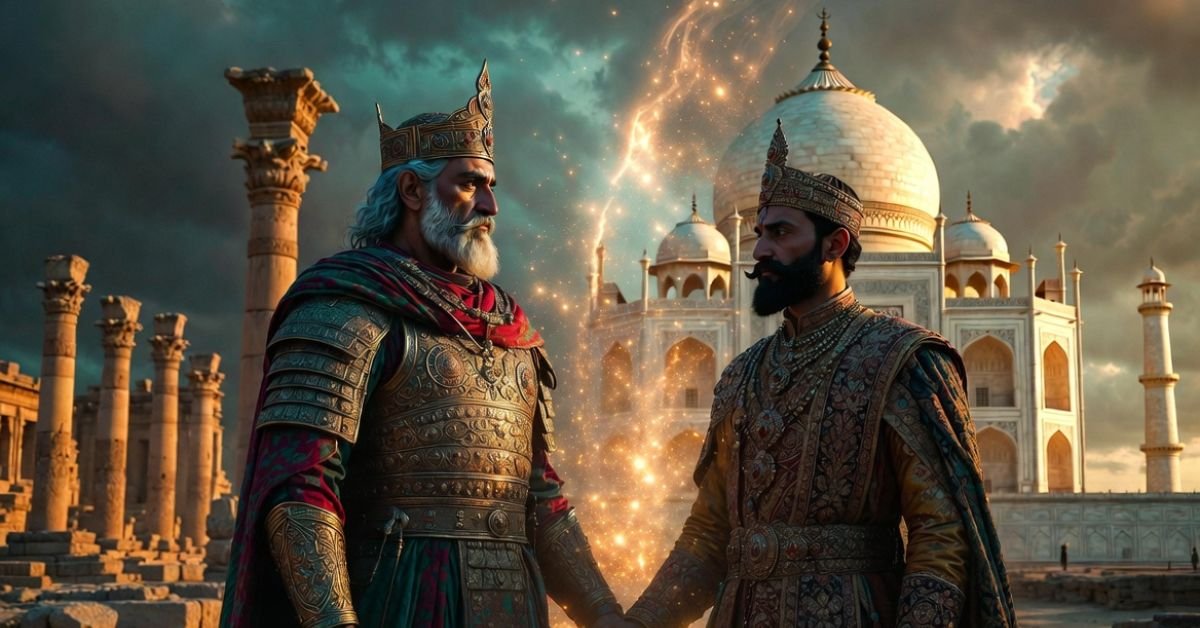
The Taj Mahal stands as a prominent example of this Indo-Persian architectural synthesis.
It was also during this era that the Urdu language emerged as a unique blend of Persian and local Indian dialects.
Modern Relations And Continued Cooperation
Historical bonds continue to shape contemporary relations between the Islamic Republic of Iran and the Republic of India.
Both nations collaborate on strategic projects, energy cooperation, and cultural exchanges.
The shared heritage remains an important foundation for their bilateral relationship.
Interesting Fact
The first Persian-language sound film was produced in Bombay in 1932 by members of the Parsi community, demonstrating the long-standing artistic collaboration between the two cultures.
The deep-rooted historical connections between Iran and India continue to serve as a bridge between two great civilizations.
Their shared legacy offers valuable insights into the power of cultural exchange and mutual respect across centuries.
For more insightful articles on world history and international relations, explore our other features on the THOUSIF INCORPORATED website.
About Author