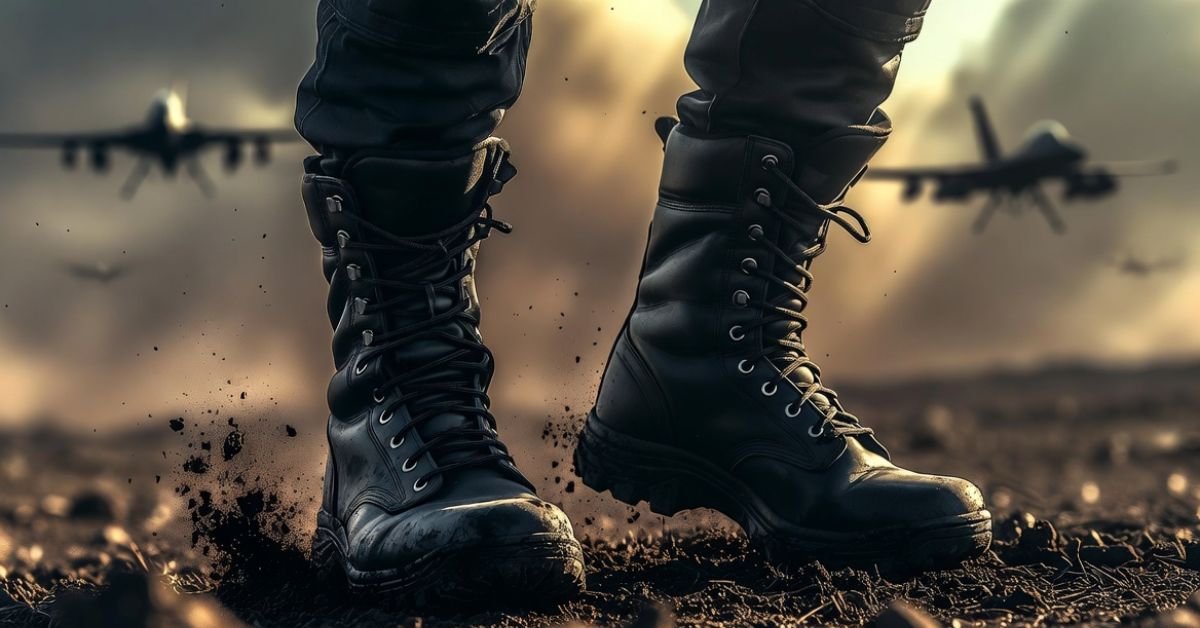

When leaders talk about fixing a crisis, you often hear the words “boots on the ground.”
It is a short way of saying: we need real people physically there, doing the job, not just planes, drones, or advice from a distance.
The phrase highlights one clear truth: technology and remote support are helpful, but nothing replaces having actual people on the scene to see, act, and succeed.
The expression became popular during the wars in Iraq and Afghanistan.
Presidents and generals used it to explain why air strikes alone were not enough.
You need soldiers on the ground to control land, talk to local people, and gather real information.
It started on April 11, 1980. U.S. Army General Volney F. Warner used the exact words while planning the Iran hostage rescue.
He wanted to make it clear that America might have to send real troops, “combat boots on the ground”, to show a serious commitment.
The phrase quickly spread among politicians, journalists, and military experts.
Today, “boots on the ground” is used far beyond the battlefield.
In business, it means staff actually visiting factories to solve problems.
In disaster relief, it means aid workers on location helping people right away. In policing, it means officers walking the streets.
The phrase is powerful because it is simple.
It reminds everyone that, no matter how advanced the world becomes, success still depends on real people willing to show up and get the work done.
In the end, “boots on the ground” is more than military slang; it is a straightforward reminder that plans only work when someone is there to carry them out.
About Author