
Table Of Contents
The Trump administration on Tuesday reported sweeping military successes in its campaign against Iran, announcing that U.S. forces have destroyed Iran’s Navy, crippled its ballistic missile program, and eliminated dozens of senior regime leaders, including Supreme Leader Ayatollah Ali Khamenei, in just days of intense airstrikes.
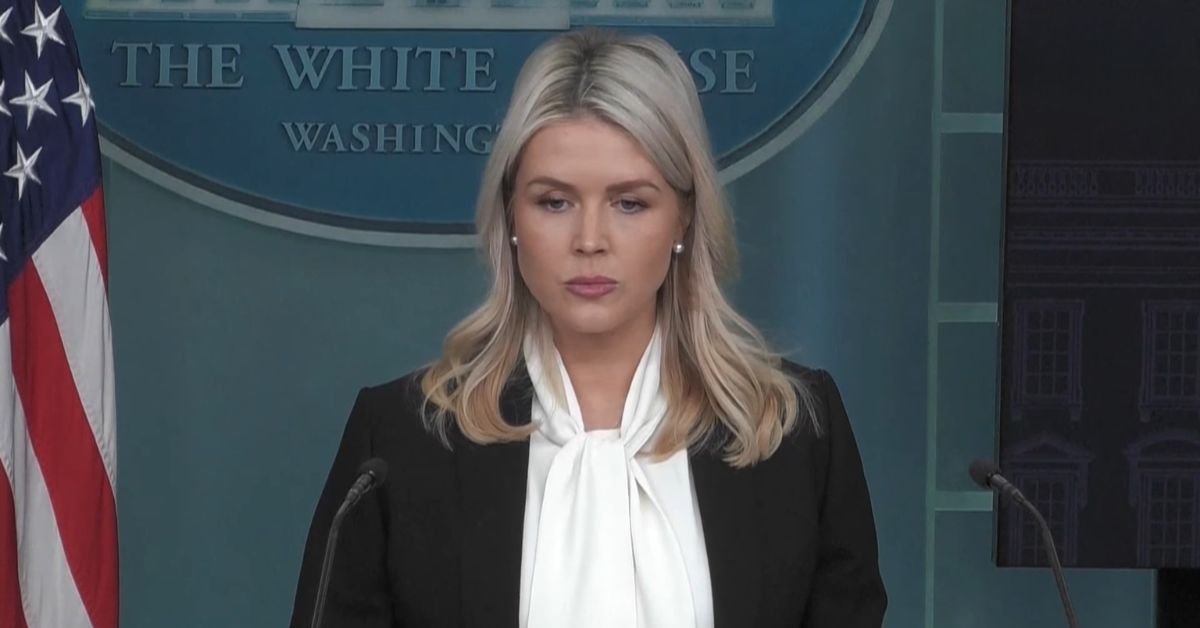
In a wide-ranging White House briefing, Press Secretary Karoline Leavitt described Operation Epic Fury as “a resounding success” and said the four core military objectives outlined by President Donald J. Trump are either achieved or nearing completion.
“Under the leadership of President Donald J. Trump, the rogue Iranian terrorist regime is being absolutely crushed,” Leavitt told reporters.
“47 years of tolerating and enabling the world’s leading state sponsor of terrorism are over.”
Four Objectives, Rapid Progress
Leavitt reiterated the operation’s stated goals, first laid out by the president when strikes began last weekend:
- Destroy Iran’s ballistic missile arsenal and production infrastructure.
- Annihilate the Iranian Navy.
- Neutralize Tehran’s regional terrorist proxies.
- Permanently end Iran’s pathway to a nuclear weapon.
Pentagon officials confirmed that more than 2,000 targets have been struck, hundreds of ballistic missiles, launchers, and drones destroyed, and Iranian missile launch rates have dropped 86% since the first day.
U.S. forces expect to achieve complete dominance over Iranian airspace within hours, officials said.
In a significant naval victory, more than 20 Iranian vessels, including the country’s top submarine, were sunk, with the first U.S. submarine torpedo strike since World War II.
Leavitt stated that there is “not a single Iranian ship underway” in the Arabian Gulf, the Strait of Hormuz, or the Gulf of Oman.
Leadership Losses And Succession Uncertainty
The administration confirmed that at least 49 senior Iranian regime figures have been killed, including Supreme Leader Khamenei.
Intelligence agencies are monitoring reports that his son, Mojtaba Khamenei, may emerge as a potential successor.
However, Leavitt said the White House is focused on military objectives rather than post-conflict governance.
“Any day the United States of America is taking out a terrorist is a good day for our country,” she said.
U.S. Losses And Evacuation Efforts
Leavitt expressed condolences for six U.S. service members killed in the operation and said President Trump plans to attend the dignified transfer of their remains.
The president has been in direct contact with the families, she added.
Simultaneously, the State Department has coordinated the return of more than 17,500 American citizens from the Middle East since the operation began, including over 8,500 who arrived home on Tuesday alone.
Additional charter and commercial flights are being arranged at no cost to citizens, and the department urged remaining Americans to register at step.state.gov for assistance.
Travel advisories warning U.S. citizens to leave the region had been issued as early as January, with Level 4 “do not travel” designations for several countries.
Background: Failed Diplomacy Preceded Strikes
Leavitt said the decision to launch strikes followed exhaustive U.S. diplomatic efforts.
Two senior Trump envoys held indirect talks with Iran, offering sanctions relief, free nuclear fuel for civilian power generation, and U.S. investment in peaceful nuclear projects, in exchange for Iran ending all uranium enrichment.
Iran rejected the proposals.
“Simply put, they refused to say yes to peace,” Leavitt said.
“Their refusal made clear that their number one priority was building a nuclear weapon with which to threaten the United States of America.”
The briefing referenced a prior U.S.-Israeli strike in June 2025 (Operation Midnight Hammer) that destroyed Iran’s three main nuclear facilities, yet Tehran continued rebuilding efforts.
Civilian Casualty Allegations Under Investigation
When asked about reports of a U.S. strike on a girls’ elementary school that allegedly killed 175 people, Leavitt stated the Department of War is investigating.
She emphasized that U.S. forces do not target civilians, contrasting that with Iranian practices.
Economic And Regional Measures
To protect global energy markets, the administration announced that the U.S. Development Finance Corporation will offer political risk insurance for oil tankers in the Gulf.
President Trump has also directed the Navy to escort tankers through the Strait of Hormuz if necessary.
Crude oil prices spiked initially but stabilized following the announcements.
Leavitt confirmed that several Arab Gulf partners, including Saudi Arabia, the UAE, Jordan, Bahrain, Qatar, and Kuwait, are providing air-defense support and have commended the U.S. action.
No Regime-Change Mandate, But Open To Iranian Freedom
While regime change is not an explicit military objective, Leavitt said the administration hopes the Iranian people will ultimately determine their own future.
“The greatest deterrent to true and long-lasting peace in the Middle East has always been the rogue Iranian terrorist regime,” she said.
The White House continues to monitor developments in Iran hour by hour, with President Trump scheduled to address the nation further later Wednesday on both the Iran operation and domestic priorities, including the SAVE Act and energy costs.
About Author