
Table Of Contents
Hey there, space enthusiasts!
Have you ever gazed at photos from Mars and spotted those weird, web-like patterns that look like giant spiderwebs sprawled across the surface?
NASA‘s latest findings from the Curiosity rover are shedding light on these mysterious formations, revealing clues about the Red Planet’s watery past.
Join us as we unpack this fascinating discovery in simple terms.
Introduction: A Web Of Wonders On The Red Planet
Picture this: you are scrolling through NASA’s latest Mars images when you suddenly see what appear to be massive spiderwebs etched into the dusty landscape.
No, it is not some sci-fi movie plot or actual arachnids building homes on another world.
These are real geological features that have puzzled scientists for years.
As a team at THOUSIF INCORPORATED, we are always diving into the latest space news to bring you clear, engaging stories like this one.
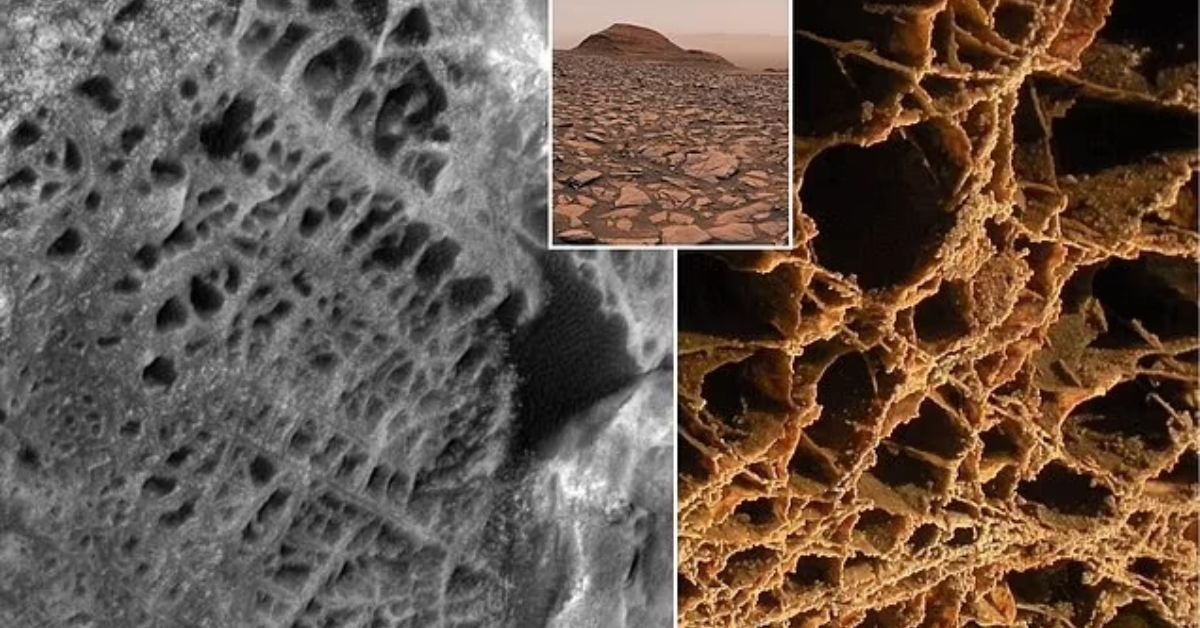
Back in 2006, NASA’s Mars Reconnaissance Orbiter first captured glimpses of these patterns from high above.
They appeared as dark, interconnected lines stretching across vast areas, resembling a spider’s web.
Fast forward to today, and the Curiosity rover, that plucky little explorer that’s been roaming Mars since 2012, has gotten up close and personal with them.
Over the past few months, it has been trekking across a region on Mount Sharp in Gale Crater, snapping photos and analyzing rocks that tell a story from billions of years ago.
These “spiderwebs” are not webs at all; they are called boxwork formations.
Think of them as a network of low ridges, about 3 to 6 feet tall, with sandy dips in between.
They cover areas up to 12 miles wide, creating a haunting, grid-like pattern when viewed from orbit.
What is exciting is that recent data from Curiosity, updated as of early 2026, shows these are not just random shapes; they are evidence of ancient groundwater that once flowed beneath Mars’ surface.
How Did These Spiderwebs Form? A Step By Step Breakdown
Let us break it down without getting too technical.
Mars was not always the dry, cold desert we know today.
Billions of years ago, it had lakes, rivers, and even underground water systems.
Scientists believe these boxwork ridges formed through a natural process involving water and minerals.
Here is how it likely happened:
- Cracks in the Rock: The bedrock on Mars developed large fractures over time, like how pavement cracks on Earth after years of wear.
- Water Flows In: Ancient groundwater seeped through these cracks, carrying dissolved minerals such as salts and clays.
- Minerals Build Up: As the water moved, it left behind minerals that hardened and strengthened certain parts of the rock. Imagine pouring glue into cracks; it makes those areas tougher.
- Erosion Takes Over: Over eons, wind and dust eroded the softer, unprotected rock, leaving the mineral-rich ridges standing tall. The sandy hollows are what is left after the weaker stuff blew away.
Curiosity has been drilling into these ridges and using its onboard tools to analyze the samples.
Recent findings confirm traces of clay minerals and other signs of water activity.
Even more intriguing, the rover spotted dark lines running through the webs; these are central fractures where water concentrated.
This supports ideas first proposed back in 2014, but now we have on-the-ground proof.
One cool update from 2026: Curiosity discovered bumpy textures called nodules on these ridges.
These little round bumps, resembling tiny eggs, are leftovers from when groundwater was drying up.
Scientists are still scratching their heads over exactly how they formed, but they add to the evidence that water lingered longer and higher up on Mount Sharp than we thought.
Mount Sharp itself is a massive mountain, about 3 miles high, built up over time from sedimentary layers.
Climbing it is like reading a history book of Mars’ climate changes.
Not To Be Confused: Mars’ Other “Spiders”
Now, if you have heard about “spiders on Mars” before, you might be thinking of something else entirely.
There is another type of spider-like feature on the Red Planet, but it is totally different.
These are called araneiforms (fancy word for spider-shaped), found mostly near Mars’ south pole.
Unlike the boxwork in Gale Crater, polar spiders form from seasonal changes.
During Mars’ harsh winter, carbon dioxide from the atmosphere freezes into ice layers on the surface.
When spring arrives, sunlight warms the ground beneath the ice, releasing the CO2 back into the atmosphere.
This gas builds pressure and bursts out like geysers, shooting dark dust upward and carving spidery channels under the ice.
The result? Dark spots and web-like patterns that can be up to a kilometer wide.
To help clarify the differences, here is a simple table comparing the two:
| Feature | Boxwork “Spiderwebs” (Gale Crater) | Araneiform “Spiders” (South Pole) |
|---|---|---|
| Location | Mount Sharp in Gale Crater, equatorial region | Near the south polar cap |
| Formation Cause | Ancient groundwater seeping through rock cracks, minerals hardening ridges | CO2 gas eruptions from under seasonal ice in spring |
| Appearance | Low ridges (3-6 feet tall) with sandy hollows, web-like from orbit | Dark spots with radiating channels etched under ice |
| Age | Billions of years old, from the wetter Mars era | Seasonal, forms anew each Martian year |
| Size | Up to 12 miles across | 45 meters to 1 km per spot |
| Implications | Hints at long-lasting underground water, possible habitability | Shows active CO2 cycles, but no direct water link |
As you can see, both are spider-ish, but one ties back to Mars’ watery history, while the other is more about its current frozen extremes.
NASA’s Mars Express and ExoMars Trace Gas Orbiter have captured amazing images of the polar regions, clearly showing the tendril-like channels.
Why This Matters: Clues To Water, Life, And Future Exploration
So, why get excited about ridges on a distant planet? These spiderwebs are like time capsules, preserving evidence of Mars’ wetter past.
Finding signs of groundwater higher up on Mount Sharp suggests that water tables were elevated and persisted longer than models predicted, even into a time when life could have emerged.
This ties into the big question: Did Mars ever host life? Water is key to life as we know it, and features like these boxwork structures show that it was not just surface lakes but also underground systems.
Curiosity’s discoveries build on earlier finds, like ancient riverbeds and lake sediments in Gale Crater.
They also help plan future missions, such as the Perseverance rover in Jezero Crater, which is collecting samples for return to Earth.
For us humans dreaming of Mars colonies, understanding groundwater remnants could point to hidden water resources.
Ice or briny aquifers might still exist underground, vital for drinking, farming, or fuel.
Plus, these formations warn about erosion and wind factors to consider when building habitats.
Recent lab experiments at NASA’s Jet Propulsion Laboratory have even recreated polar spiders in controlled settings, using CO2 ice and dust to mimic the geyser process.
This helps confirm theories and might inspire tech for exploring icy moons like Europa.
Trivia Time
Here is a mind-bender: The boxwork ridges on Mars are not unique to the Red Planet. Similar formations exist on Earth, such as those in Wind Cave National Park in South Dakota, where groundwater dissolved limestone, leaving behind mineral veins. However, on Mars, they are exposed on a grand scale because there is no vegetation or heavy rain to hide them, making them a planetary-sized geology lesson!
Wrapping It Up
There you have it, the scoop on NASA’s spiderwebs on Mars, from their watery origins to the latest rover revelations.
It is a reminder of how much we still have to learn about our cosmic neighbor.
At THOUSIF INCORPORATED, we are passionate about making space science accessible and fun, so if this sparked your Curiosity, check out our other articles on everything from black holes to exoplanets.
What is your take on Mars’ mysteries? Drop a comment below, we would love to hear!
Stay curious, folks.
About Author