
The Trump administration has revoked the lawful permanent resident status of Hamideh Soleimani Afshar, niece of the late Iranian Major General Qasem Soleimani, and her daughter Sarinasadat Hosseiny, citing their public support for Iran’s government and the Islamic Revolutionary Guard Corps (IRGC), which the United States designates as a foreign terrorist organization.
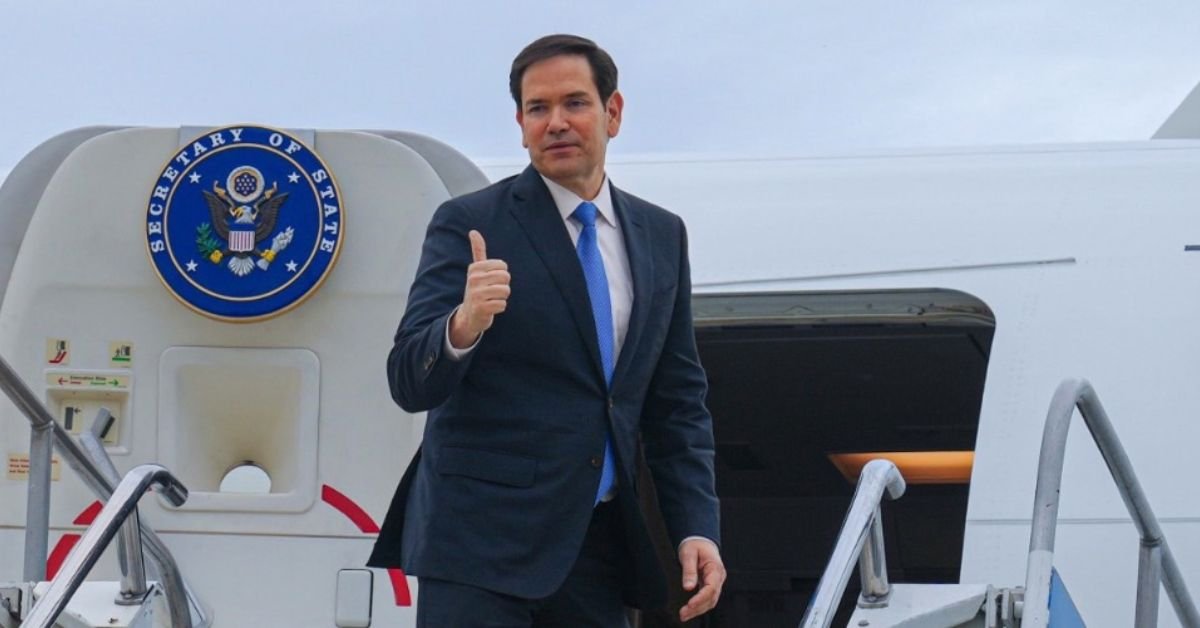
Secretary of State Marco Rubio announced the decision on Saturday, April 4, 2026.
Both women were arrested by U.S. Immigration and Customs Enforcement (ICE) agents in Los Angeles on Friday, April 3, and are now in federal custody pending removal proceedings.
“Until recently, Hamideh Soleimani Afshar and her daughter were green card holders living lavishly in the United States,” Rubio wrote on X.
“Afshar is the niece of the deceased Iranian Major General Qasem Soleimani. She is also an outspoken supporter of the Iranian regime who celebrated attacks on Americans and referred to our country as the ‘Great Satan.’ This week, I terminated both Afshar and her daughter’s legal status, and they are now in ICE custody, pending removal from the United States.”
“The Trump Administration will not allow our country to become a home for foreign nationals who support anti-American terrorist regimes,” he added.
The State Department described Afshar as “an outspoken supporter of the totalitarian, terrorist regime in Iran” who, while living in Southern California, “promoted Iranian regime propaganda, celebrated attacks against American soldiers and military facilities in the Middle East, praised the new Iranian Supreme Leader, denounced America as the ‘Great Satan,’ and voiced her unflinching support for the Islamic Revolutionary Guard Corps.”
Officials noted that she posted this content on her Instagram account (now deleted) while sharing images of a luxurious lifestyle in Los Angeles and other U.S. cities.
Afshar, 47, entered the United States in June 2015 on a tourist visa.
An immigration judge granted her asylum in 2019, and she received a green card in 2021.
Her daughter, Sarinasadat Hosseiny, 25, arrived in July 2015 on a student visa, was granted asylum in 2019, and became a lawful permanent resident in 2023.
In July 2025, Afshar applied for U.S. citizenship and disclosed that she had traveled back to Iran at least four times after receiving her green card.
The Department of Homeland Security stated that these trips “illustrate her asylum claims were fraudulent.”
Afshar’s husband has also been formally barred from entering the United States.
Qasem Soleimani commanded the IRGC’s elite Quds Force and was killed in a U.S. drone strike near Baghdad International Airport in January 2020. U.S. officials have long accused him of orchestrating attacks on American forces and supporting proxy militias across the Middle East.
The action against Soleimani’s relatives is part of a broader crackdown by the Trump administration.
In recent weeks, Secretary Rubio has revoked green cards or visas of at least four Iranian nationals with ties to the Iranian government or its proxies.
The moves come amid heightened U.S.-Iran tensions, including ongoing military operations involving the United States and Israel against Iranian targets that began in late February 2026.
DHS spokesperson Lauren Bis emphasized the policy rationale: “It is a privilege to be granted a green card to live in the United States of America. If we have reason to believe a green card holder poses a threat to the U.S., the green card will be revoked.”
Under the Immigration and Nationality Act, the government may revoke lawful permanent resident status on national security grounds, including support for designated terrorist organizations or material misrepresentation in immigration applications.
The two women will have the opportunity to contest the revocation during removal proceedings before an immigration judge, though executive-branch national-security determinations generally receive significant deference.
Neither Afshar nor Hosseiny has made a public statement since their arrest.
Narjes Soleimani, daughter of the late general, rejected the U.S. claims, stating that the arrested individuals “have no connection whatsoever” to her father and that the allegations were “fabricated lies.”
The Iranian mission to the United Nations had no immediate comment.
The case underscores the administration’s position that permanent residency is not an absolute right and that public endorsement of entities hostile to the United States can result in the loss of that status.
About Author