
Table Of Contents
Alberta To Vote On Whether To Begin Separation Process
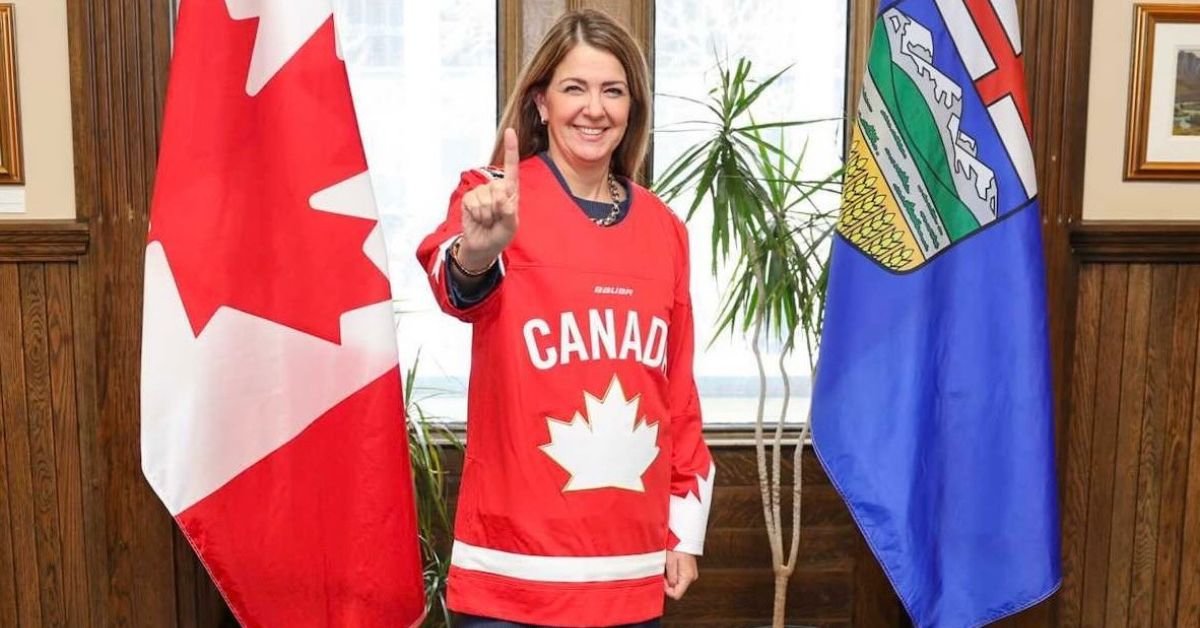
Alberta Premier Danielle Smith made a significant announcement in a televised address on Thursday night, May 21, 2026.
Voters will now get a direct say on whether the province should begin the legal process that could eventually lead to a binding referendum on leaving Canada.
The question will appear on the October 19, 2026, ballot alongside nine other referendum questions.
“This is not a vote to separate. It is a vote on whether to start the legal steps that could lead to a binding separation referendum later.”
– Premier Danielle Smith, May 21, 2026
Important Clarification
This is not a direct vote on separation.
It asks whether Alberta should start the constitutional process required to hold a future binding independence referendum.
Premier Smith has clearly stated that she will vote against separation and wants Alberta to remain in Canada.
The Petitions That Forced The Issue
Two major citizen petitions created the pressure for this moment:
- Forever Canadian (pro-unity, led by former deputy premier Thomas Lukaszuk): More than 400,000 signatures
- Stay Free Alberta (pro-independence): More than 300,000 signatures
Total: Roughly 700,000 Albertans signed one of the two petitions, a remarkable level of engagement in a province of about 4.8 million people.
Earlier this month, Justice Shaina Leonard of the Court of King’s Bench struck down the Stay Free Alberta petition.
The ruling found that the provincial government failed to properly consult First Nations before the petition process began, given the potential impact on treaty rights.
Premier Smith responded by saying one court decision should not silence hundreds of thousands of citizens.
Her government has now crafted a more carefully worded question designed to withstand legal challenges while still addressing the public demand.
What The Polling Actually Shows
Support for holding a vote is one thing.
Support for actually leaving Canada is another.
| Pollster | Date | Support For Leaving Canada | Support For Staying | Notes |
|---|---|---|---|---|
| Angus Reid Institute | February 2026 | 29% (8% definite yes, 21% leaning yes) | 65% | 57% of voters have firmly decided to stay |
| Ipsos | January 2026 | 28% (definitely, probably, or leaning yes) | Not directly measured | Only ~16% are hardline separatists |
While overall support for independence has risen to levels similar to those seen in Quebec in recent decades, a clear majority of Albertans, and a strong majority of decided voters, still prefer to remain in Canada.
The Economic Stakes
Independence talk may be emotionally charged, but the economics are sobering.
- University of Calgary economist Trevor Tombe has estimated that full separation could cost Alberta roughly $20 billion in near-term economic activity, approximately 4% of provincial GDP, or about $3,900 per person annually.
A recent survey by the Calgary Chamber of Commerce found that:
- 83% of members who have seen an economic impact believe that the discussion of separation is increasing the risk of a recession.
- 74% said some businesses are already considering relocating out of the province.
Proponents’ Counterargument
Greater autonomy would provide full control over resources, reduce equalization payments, and enable new trade arrangements, particularly with the United States, that could offset some long-term costs.
The province’s fiscal picture has also improved recently, with oil prices trading near $94 per barrel, well above the $74 break-even price assumed in the current budget.
Why Smith Is Doing This
Premier Smith has repeatedly said she personally opposes independence. So why add the question?
The primary reason appears to be managing internal divisions within her United Conservative Party (UCP).
On the same day as her address, UCP caucus members pushed to include the question.
Separatist voices, including legal counsel Jeff Rath, had threatened to challenge her leadership if she ignored the petitions.
Political scientists have drawn comparisons to former British Prime Minister David Cameron, who called the Brexit referendum largely to manage Eurosceptic factions in his own party.
This move ultimately backfired when the public voted against it.
What Happens If Albertans Vote Yes
A “Yes” vote on October 19 would not immediately sever Alberta’s ties to Canada.
It would instruct the provincial government to begin the complex legal and constitutional process required to hold a future binding referendum on independence.
That process would involve:
- Extensive negotiations with the federal government in Ottawa
- Mandatory consultation with First Nations, whose treaty rights predate the province
- Drafting a clearer, direct separation question for a subsequent vote
The Supreme Court of Canada has ruled that no province can unilaterally secede.
Any actual separation would require good-faith negotiations with the rest of Canada and would likely take years.
The View From Ottawa And Beyond
Prime Minister Mark Carney’s government has been negotiating with Alberta on key economic priorities, most notably a new pipeline route to the Pacific coast.
Progress on these files could reduce separatist momentum.
Delays could strengthen it.
There is also an international dimension: the Alberta Prosperity Project, a pro-independence group, has reportedly held three meetings with the U.S. State Department and Treasury between April 2025 and January 2026, exploring what economic and trade relationships an independent Alberta might pursue with the United States.
What Comes Next
Albertans have five months until the vote.
Expect:
- Intense campaigning from both sides
- Additional legal challenges
- Strong participation from First Nations leaders emphasizing treaty rights
Issues such as pipelines, equalization payments, immigration, and federal energy policy will all be central to the debate.
For now, all eyes are on October 19, 2026.
Closing Note
Alberta’s referendum will not break up Canada on its own.
However, it represents the most significant test of Canadian unity in a generation.
How the vote unfolds will influence federal-provincial relations for years to come.
About Author